
Biology 2010 Jamb Examination

Question 41
Not clear enough?
Question 42
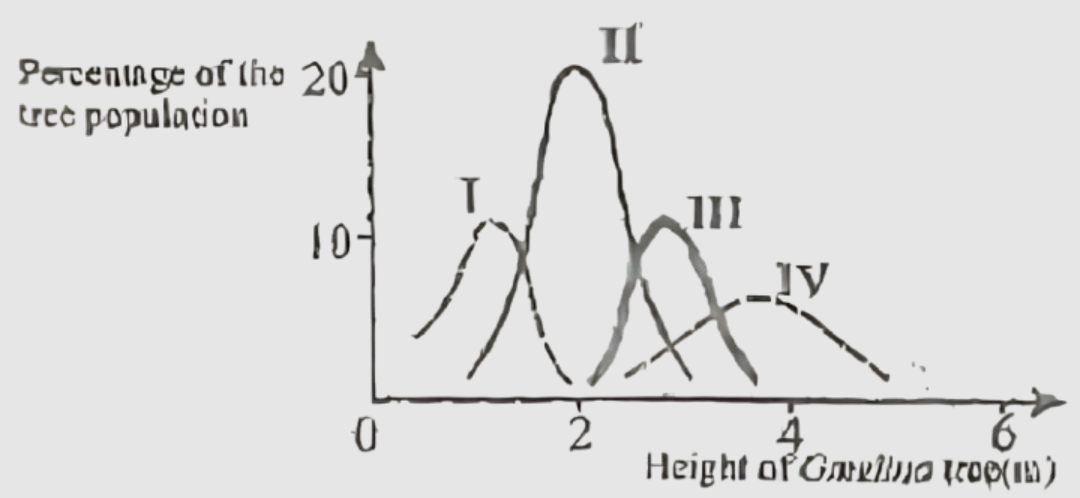
Use the diagram above to answer this question. In which plantation are all the trees between the height of 2-4m?
Not clear enough?
Question 43
Use the diagram above to answer this question. Which of the following is a true feature of plantation ll?
Not clear enough?
Question 44
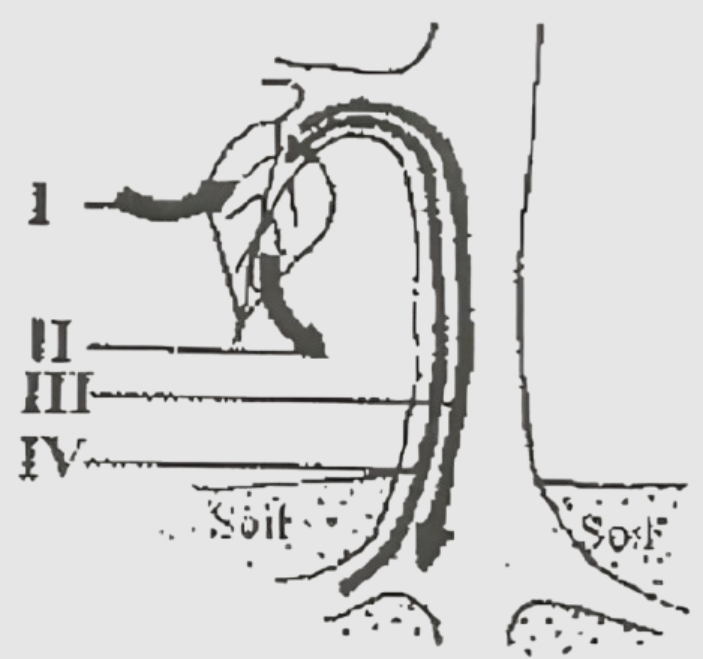
Use the diagram above to answer this question. The movement of material in the xylem and phloem tissues of the plant are represented by the arrows labeled?
xylem, plant vascular tissue that conveys water and dissolved minerals from the roots to the rest of the plant and also provides physical support.
Phloem is a living tissue in vascular plants which conducts the soluble organic compounds synthesized during photosynthesis downwards from the leaves.
Not clear enough?
Question 45
Use the diagram above to answer this question. During photosynthesis, the arrow labeled II represents the?
Not clear enough?
Question 46
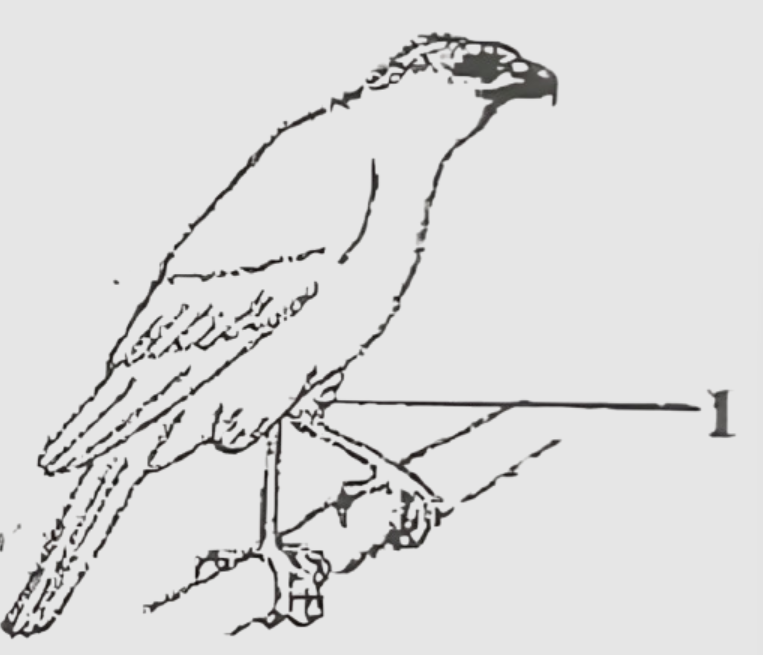
Use the diagram above to answer this question.The main function of the feathers covering the part labeled I is to?
Not clear enough?
Question 47
Use the diagram above to answer this question based on the shape and structure of the beak and feet, the bird represented is likely to feed mainly on?
Not clear enough?
Question 48
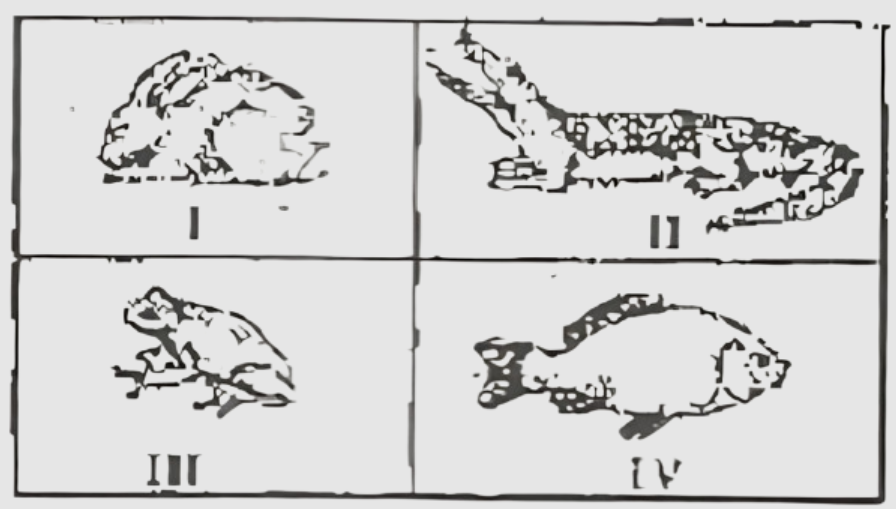
Use the diagram above to answer this question.With respect to their decreasing dependence on aquatic conditions for reproduction, which of the following is the correct arrangement of the animals represented?
- Like frogs, most toads lay their fertilized eggs in water, where they hatch into tadpoles before developing into adult toads. These amphibians need a safe, undisturbed body of water to lay their eggs in. However, a few species breed on land.
- the mother alligator typically lays about 35 eggs in a nest made of mud, sticks and other plant matter.
- Rabbits sometimes dig a burrow in which to give birth
Not clear enough?
Question 49
In the diagram, which of the animals represents the oldest creatures in terms of evolutionary history?
Not clear enough?
Question 50
(ii) State the habitats of the organisms named in 1(a) above.
(b) State how the structure of specimens A and B adapt the organisms to their mode of life.
(c)(i) Outline one difference. (ii) two similarities between specimens A and B.
(d) Make drawing 8–10 cm long of specimen B and label fully.
Not clear enough?
You might like
This question is based on selection poems from Johnson, R. et al, Soyinka, W., Senanu, K.E. and Vincent, T., Maduka, C.T. et al, Eruvbetine, A.E. et al, and Nwoga, D.I.
The concern of the poet in Serenade is to:
At what respective value of a, b, and c would the unit of work, the joule, be dimensionally similar to M\(^{a}\) L\(^{b}\) T\(^{c}\)?
