
Chemistry 2015 Jamb Examination
Chemistry 2015 Jamb Examination

Question 51
Detergents are manufactured with straight hydrocarbon chains, is to make them
Straight-chain hydrocarbons in detergents allow microorganisms to break them down easily during biodegradation. Branched-chain hydrocarbons resist microbial attack, leading to environmental persistence. Therefore, using straight-chain hydrocarbons makes detergents environmentally friendly and biodegradable.
Not clear enough?
Question 52
Which of the following results in the fall of acid rain?
Acid rain is caused mainly by the release of sulphur dioxide (SO2) and nitrogen oxides (NOx) into the atmosphere. These gases react with water vapour to form sulphuric and nitric acids, which fall as acid rain. Therefore, oxides of sulphur are key contributors to acid rain formation.
Not clear enough?
Question 53
The furring of kettles is caused by the presence of what compound in water?
Temporary hardness in water is due to calcium hydrogentrioxocarbonate (Ca(HCO3)2). When heated, it decomposes to form insoluble calcium trioxocarbonate (CaCO3), which deposits on kettle surfaces as scale (furring). Hence, the presence of calcium hydrogentrioxocarbonate causes furring in kettles.
Not clear enough?
Question 54
A difference between chemical and physical change is that in a chemical change
A chemical change involves the breaking and formation of chemical bonds, resulting in the creation of one or more new substances with properties different from the original ones. Physical changes, by contrast, do not form new substances but only alter the physical state. Thus, the formation of a new substance distinguishes a chemical change.
Not clear enough?
Question 55
PCl5(g) ⇌ PCl3(g) + Cl2(g)
In the reaction above, a decrease in pressure will
In the reaction above, a decrease in pressure will
The reaction involves the decomposition of one mole of gaseous PCl5 into two moles of gaseous products (PCl3 and Cl2). According to Le Chatelier’s principle, a decrease in pressure favours the side with more gas molecules to counter the change by increasing pressure. Therefore, lowering pressure shifts the equilibrium towards the right, resulting in more gaseous products being formed. Hence, the yield of PCl3 and Cl2 increases.
Not clear enough?
Question 56
Which of the following gives a precipitate when treated with NaOH solution?
When sodium hydroxide is added to aluminium chloride (AlCl3), a white precipitate of aluminium hydroxide, Al(OH)3, is formed:
AlCl3 + 3NaOH → Al(OH)3↓ + 3NaCl
Other compounds such as NH4Cl and CH3COONa do not form insoluble hydroxides, while Na2CO3 produces soluble sodium hydroxide and carbonate ions. Therefore, AlCl3 produces a precipitate with NaOH solution.
AlCl3 + 3NaOH → Al(OH)3↓ + 3NaCl
Other compounds such as NH4Cl and CH3COONa do not form insoluble hydroxides, while Na2CO3 produces soluble sodium hydroxide and carbonate ions. Therefore, AlCl3 produces a precipitate with NaOH solution.
Not clear enough?
Question 57
The electronic configuration of an element with atomic number 13 in the subsidiary energy levels is
The atomic number 13 corresponds to aluminium. Filling electrons according to the Aufbau principle, the configuration is:
1s2 → 2 electrons
2s2 → 2 electrons
2p6 → 6 electrons
3s2 → 2 electrons
3p1 → 1 electron
Hence, the configuration is 1s22s22p63s23p1.
1s2 → 2 electrons
2s2 → 2 electrons
2p6 → 6 electrons
3s2 → 2 electrons
3p1 → 1 electron
Hence, the configuration is 1s22s22p63s23p1.
Not clear enough?
Question 58
In countries where the temperature falls below 273 K, salt is always spilled on the road in order to
When salt is added to ice, it lowers the freezing point of water — a phenomenon known as freezing point depression. The dissolved salt disrupts the formation of the orderly solid ice lattice, meaning ice melts at a lower temperature. This helps to prevent ice from forming on roads in very cold conditions.
Not clear enough?
Question 59
The substance that is used in the steel industry for the removal of carbon, sulphur, and phosphorus impurities from pig iron is
In the steel-making process, oxygen is blown through molten pig iron to oxidise impurities such as carbon, sulphur, and phosphorus, forming gaseous oxides that escape or form slag. This process, known as the basic oxygen process, refines the iron into steel of desired purity.
Not clear enough?
Question 60
If glucose is heated with concentrated tetraoxosulphate(VI) acid, it will be dehydrated to
Concentrated tetraoxosulphate(VI) acid (H2SO4) is a strong dehydrating agent. When it is added to glucose, it removes water molecules, leaving behind pure carbon. The reaction produces a black residue of carbon and water vapour is evolved:\[ \text{C}_6\text{H}_{12}\text{O}_6 \xrightarrow{\text{conc. }H_2SO_4} 6C + 6H_2O \]
Not clear enough?
You might like
Carbohydrates are large molecules with the molecular formula C\( _x \)(H\( _2 \)O)\( _y \). In which of the following pairs is x not equal to y?
The arrangement of ovules attached to the sides of a syncarpous ovary with a single chamber is referred to as
Which of the following applications is LEAST appropriate for creating and managing a dynamic, searchable database?
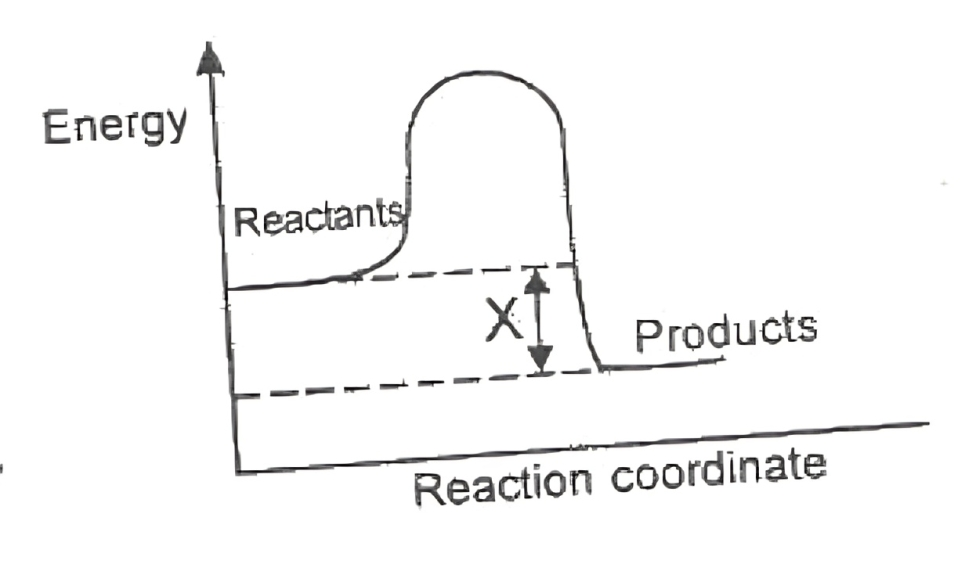
Choose the option opposite in meaning to the word or phrase in italics.
The potency of the drug has been acknowledged.