
Mathematics 2015 Jamb Examination
Mathematics 2015 Jamb Examination

Question 31
100112 + *****2 + 111002 + 1012 = 10011112
Convert the binary to base 10 and they convert back to base two
100112 + xxxxx2 + 111002 + 1012 = 10011112
(1 × 24 + 0 × 23 + 1 × 22 + 1 × 21 + 1 × 20) + xxxxx2 +(1 × 24 + 1 × 23 + 1 × 22 + 0 × 21 + 0 × 20) + (1 × 22 + 0 × 21 + 1 × 20)
= (16 + 0 + 0 + 2 + 1) + xxxxx2 + (16 + 8 + 4 + 0 + 0 ) + (4 + 0 + 1)
=(64 + 0 + 0 + 8 + 4 + 2 + 1)
19 + xxxxx2 + 33 = 79
xxxxx2 + 52 = 79
xxxxx2 = 79 − 52
xxxxx2 = 2710
\[ \begin{array}{c|l}
2 & 27 \\ \hline
2 & 13\ \text{rem}\ 1 \\
2 & 6\ \text{rem}\ 1 \\
2 & 3\ \text{rem}\ 0 \\
2 & 1\ \text{rem}\ 1 \\
& 0\ \text{rem}\ 1 \quad \uparrow
\end{array}\] 2710 = 110112
Therefore xxxxx2 = 2710 = 110112
Not clear enough?
Question 32
Evaluate log5(y2x5 ÷ 125b½)
We use the laws of logarithms: the product law \(\log(MN) = \log M + \log N\), the quotient law \(\log(M/N) = \log M - \log N\), and the power law \(\log M^p = p\log M\).\[ \log_5\left(\dfrac{y^2x^5}{125b^{1/2}}\right) \]\[ = \log_5(y^2x^5) - \log_5(125b^{1/2}) \]\[ = (\log_5 y^2 + \log_5 x^5) - (\log_5 125 + \log_5 b^{1/2}) \]\[ = 2\log_5 y + 5\log_5 x - (\log_5 5^3 + \dfrac{1}{2}\log_5 b) \]\[ = 2\log_5 y + 5\log_5 x - 3 - \dfrac{1}{2}\log_5 b \]\[ = 2\log_5 y + 5\log_5 x - \dfrac{1}{2}\log_5 b - 3 \]
Not clear enough?
Question 33
Integral ∫(5x3 + 7x2 − 2x + 5) dx
To integrate the polynomial, we apply the power rule for integration: \(\int x^n dx = \dfrac{x^{n+1}}{n+1} + C\) for each term:\[ \int 5x^3 dx = \dfrac{5x^{3+1}}{3+1} = \dfrac{5x^4}{4} \]\[ \int 7x^2 dx = \dfrac{7x^{2+1}}{2+1} = \dfrac{7x^3}{3} \]\[ \int -2x dx = \dfrac{-2x^{1+1}}{1+1} = -x^2 \]\[ \int 5 dx = 5x \]Combining these terms and adding the constant of integration \(C\):\[ \dfrac{5x^4}{4} + \dfrac{7x^3}{3} - x^2 + 5x + C \]
Not clear enough?
Question 34
Find the area of the curved surface of a cone whose base radius is 3cm and whose height is 4cm (π = 3.14)
The curved surface area (C.S.A.) of a cone is given by the formula:\[ \text{C.S.A.} = \pi r l \]Where \(r\) is the radius and \(l\) is the slant height. We are given height \(h = 4\) cm and radius \(r = 3\) cm. We find \(l\) using Pythagoras' theorem:\[ l = \sqrt{r^2 + h^2} \]\[ l = \sqrt{3^2 + 4^2} = \sqrt{9 + 16} = \sqrt{25} = 5 \, \text{cm} \]Now calculate the area:\[ \text{C.S.A.} = 3.14 \times 3 \times 5 \]\[ \text{C.S.A.} = 3.14 \times 15 = 47.1 \, \text{cm}^2 \]
Not clear enough?
Question 35
Simplify 1/(x + 1) + 1/(x − 1)
To simplify the sum of these fractions, we find the common denominator, which is the product of the two denominators: \((x + 1)(x - 1)\).\[ \dfrac{1}{x+1} + \dfrac{1}{x-1} = \dfrac{(x-1) + (x+1)}{(x+1)(x-1)} \]\[ = \dfrac{x - 1 + x + 1}{(x + 1)(x - 1)} \]\[ = \dfrac{2x}{(x + 1)(x - 1)} \]This result matches option B.
Not clear enough?
Question 36
The area of a circle of radius 4cm is equal to (Take π = 3.142)
The area \(A\) of a circle is calculated using the formula:\[ A = \pi r^2 \]Given radius \(r = 4\) cm and \(\pi = 3.142\):\[ A = 3.142 \times (4)^2 \]\[ A = 3.142 \times 16 \]\[ A = 50.272 \, \text{cm}^2 \]Correct to one decimal place, the area is 50.3 cm2.
Not clear enough?
Question 37
The area of an ellipse is 132cm2. The length of its major axis is 14cm. Find the length of its minor axis
The area of an ellipse is given by the formula:\[ \text{Area} = \pi a b \]Where \(a\) is the semi-major axis and \(b\) is the semi-minor axis. The length of the major axis is \(2a = 14\) cm, so \(a = 7\) cm. We take \(\pi\) as \(22/7\).\[ 132 = \dfrac{22}{7} \times 7 \times b \]\[ 132 = 22b \]\[ b = \dfrac{132}{22} = 6 \, \text{cm} \]The minor axis is \(2b = 2 \times 6 = 12\) cm.
Not clear enough?
Question 38
The volume of a cone of height 6cm and base radius 5cm is
The volume \(V\) of a cone is given by the formula:\[ V = \dfrac{1}{3}\pi r^2 h \]Given radius \(r = 5\) cm and height \(h = 6\) cm. Using \(\pi \approx 3.14159\):\[ V = \dfrac{1}{3} \times 3.14159 \times 5^2 \times 6 \]\[ V = 3.14159 \times 25 \times 2 \]\[ V = 3.14159 \times 50 \]\[ V = 157.079 \, \text{cm}^3 \]Rounding to the nearest whole number, we get 157 cm3.
Not clear enough?
Question 39
The probability of an outcome A is 1/6. The probability of the B outcome is 1/4. If the probability of A or B or both is 1/12. What is the probability of both outcomes A and B?
There is a logical contradiction in the question parameters. Usually, \(P(A \cup B) = P(A) + P(B) - P(A \cap B)\). However, if \(P(A \cup B) = 1/12\), this is less than either \(P(A)\) or \(P(B)\), which is impossible for a union of sets. Assuming the intended question meant \(P(A \cup B)\) is the unknown and the intersection is 1/12:\[ P(A \cup B) = \dfrac{1}{6} + \dfrac{1}{4} - \dfrac{1}{12} \]\[ P(A \cup B) = \dfrac{2+3-1}{12} = \dfrac{4}{12} = \dfrac{1}{3} \]Correcting the likely error in the prompt's value assignment to solve for the intersection:
If \(P(A \cup B) = 1/3\), then \(P(A \cap B) = 1/6 + 1/4 - 1/3 = 1/12\). Since the options do not provide 1/12, and if we strictly use the formula to find intersection using the prompt's own flawed values:\[ P(A \cap B) = P(A) + P(B) - P(A \cup B) \]\[= \dfrac{1}{6} + \dfrac{1}{4} - \dfrac{1}{12} = \dfrac{4}{12} = \dfrac{1}{3} \]
If \(P(A \cup B) = 1/3\), then \(P(A \cap B) = 1/6 + 1/4 - 1/3 = 1/12\). Since the options do not provide 1/12, and if we strictly use the formula to find intersection using the prompt's own flawed values:\[ P(A \cap B) = P(A) + P(B) - P(A \cup B) \]\[= \dfrac{1}{6} + \dfrac{1}{4} - \dfrac{1}{12} = \dfrac{4}{12} = \dfrac{1}{3} \]
Not clear enough?
Question 40
Given that Z = {1, 2, 4, 5} what is the power of set Z?
The power set of a set \(Z\) is the set of all possible subsets of \(Z\). The number of elements in the power set is given by the formula:\[ \text{Power set size} = 2^n \]where \(n\) is the number of elements in set \(Z\).
Set \(Z = \{1, 2, 4, 5\}\) contains \(n = 4\) elements.\[ \text{Power set size} = 2^4 = 16 \]There are 16 possible subsets including the empty set and the set itself.
Set \(Z = \{1, 2, 4, 5\}\) contains \(n = 4\) elements.\[ \text{Power set size} = 2^4 = 16 \]There are 16 possible subsets including the empty set and the set itself.
Not clear enough?
You might like
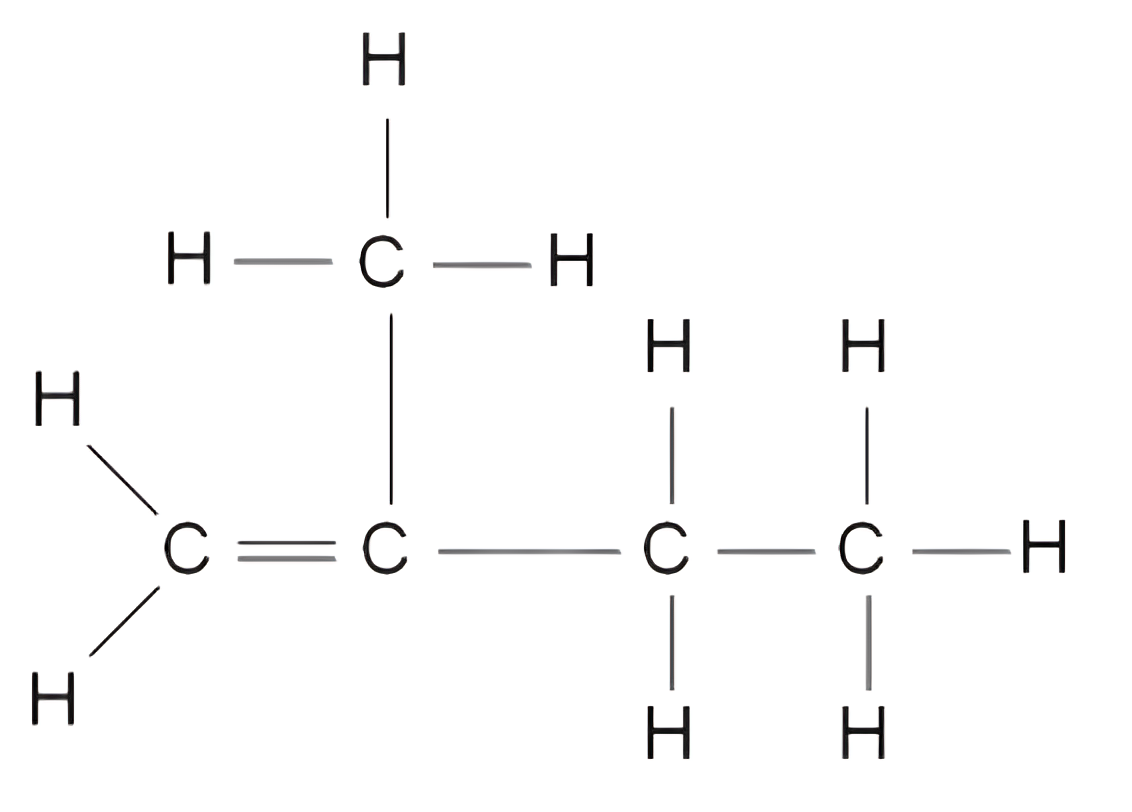
When a crystal was added to the clear solution of its salt, the crystal did not dissolve and the solution remained unchanged. This showed that the solution was
If X = {all the perfect squares less than 40} and Y = {all the odd numbers from 1 to 15}. Find X ∩ Y.
$^{2}_{1}\text{D} + ^{3}_{1}\text{T} \;\to\; ^{4}_{2}\text{He} + ^{1}_{0}\text{n} + \text{energy}$
The reaction above illustrates
These question is based on Literary Appreciation.
Will no one tell me what she sings
Perhaps the plaintive numbers flow
For old, unhappy, far off things
And battles long ago.
Or is it some more humble lay,
Familiar matter of today?
The lines above end in a literary device known as