
Biology 2006 Jamb Examination

Question 41
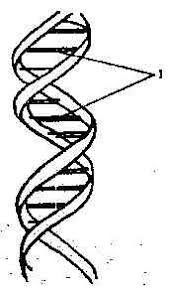
D. DNA
The diagram shows the double helix structure, characteristic of DNA. It carries genetic information in the sequence of its nucleotides and is essential for heredity, replication, and protein synthesis.
Not clear enough?
Question 42
A. Base pairs
The labelled I represents the complementary base pairs (adenine-thymine, guanine-cytosine) which form hydrogen bonds in the DNA double helix. They encode genetic information and determine the sequence of amino acids in proteins.
Not clear enough?
Question 43
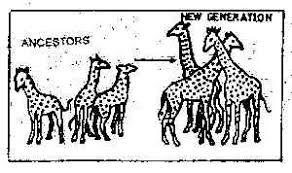
D. Natural selection
The variation in giraffe neck length is an example of natural selection. Individuals with longer necks can reach more food in tall trees, survive better, and reproduce, passing on the advantageous trait over generations.
Not clear enough?
Question 44
B. Morphological
The giraffe neck variation represents a morphological variation, affecting the physical structure of the organism. Morphological traits are observable and can influence survival and reproductive success.
Not clear enough?
Question 45
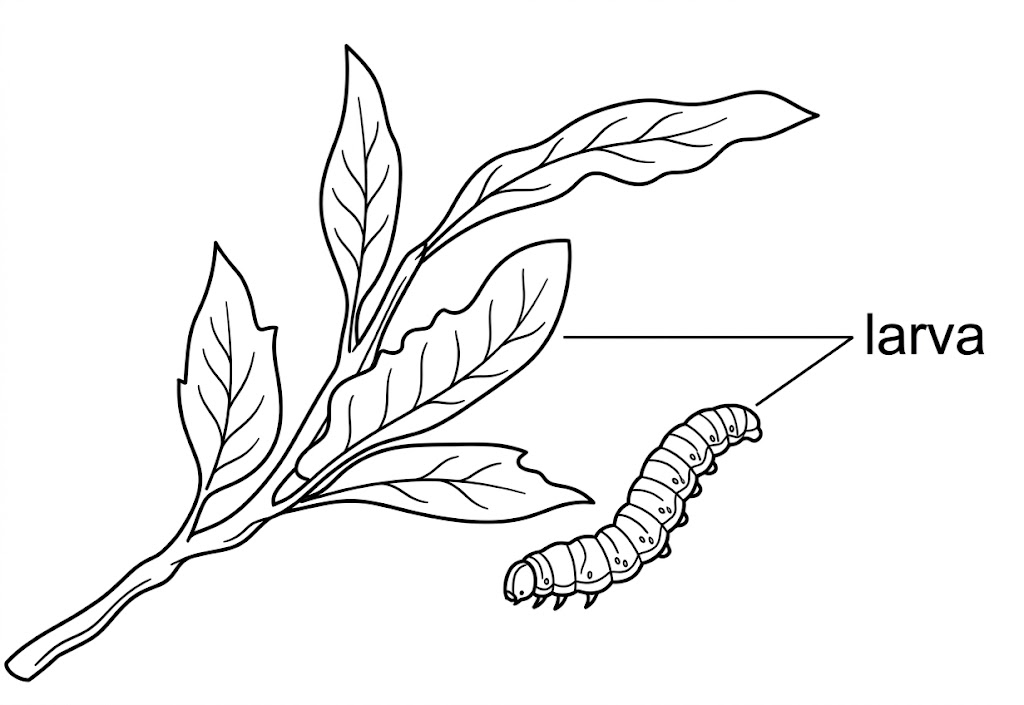
In the diagram, the economic importance of the larva is that it
Larva can have both positive and negative economic impacts, as they can be a vital food source for some while also being agricultural pests that damage crops. Some larva are edible and provide a source of protein and nutrients for humans and animals.
On the other hand, larva can consume leaves and other plant parts, potentially damaging crops and reducing yields. In the context of the manner in which the question was asked, the negative economic impact is actually what the examiner intended. Thus, option D is the correct answer.
Not clear enough?
Question 46
In the diagram, the type of adaptation shown in the larva is
disruptive colouration
The adaptation shown by a larva on plant leaves is most likely disruptive coloration, where the larva's coloration breaks up its outline, making it harder for predators to spot. Many insects, like butterflies and caterpillars, use disruptive coloration to blend in with leaves, twigs, or other parts of their environment.
Not clear enough?
Question 47
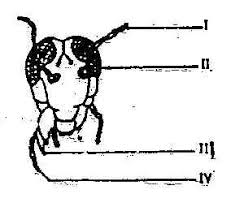
In the diagram, the maxillary palp is labelled?
iv
The maxillary palp labelled iv:
- Small antenna-like sensory appendage emerging from the maxilla.
- These palps serve as organs of touch and taste in feeding and in the inspection of potential foods and/or prey.
Not clear enough?
Question 48
D. Chemicals and touch
The structure labelled I refers to the antenna of the insect, which detects chemical cues (smell) and mechanical stimuli (touch). These sensory inputs help the insect navigate, find food, and interact with the environment.
Not clear enough?
Question 49
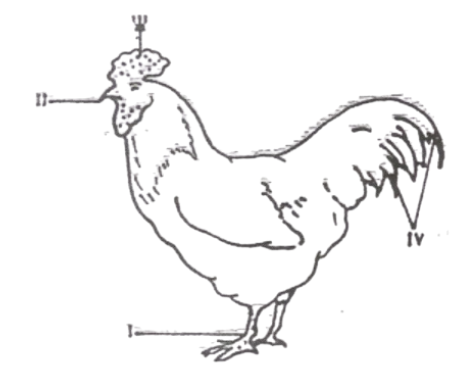
In the diagram, a unique characteristic that distinguishes the class of vertebrates represented from other vertebrates is the presence of
D. A covering of feathers
The diagram represents a bird. Feathers are unique to birds, providing insulation, aiding in flight, and serving for display and camouflage. This feature distinguishes birds from reptiles, mammals, amphibians, and fish.
Not clear enough?
Question 50
In the diagram, the structures used for offense and defense are labelled
B. i and ii
The structures labelled I and II are the claws and beak, respectively. These are used for offense (hunting or attacking) and defense (protection against predators), which are crucial adaptations in birds for survival.
Not clear enough?
You might like
From the novel; Twelfth Night
This question is based on William Shakespeare's Twelfth Night.
What would you consider to be the major theme of the play?
This question is based on Selected Poems from Johnson, R et al (eds): New Poetry from Africa; Soyinka, (ed): Poems of Black Africa; Senanu, K.E, and Vicent, T.(ed.): A Selection of African Poetry; Gbemisola A.: Naked Soles; Hayward, J.(ed.): The Penguin Book of English Verse and Nwoga, D.(ed.): West African Verse.
Tennyson's Crossing the Bar is ________?