
Biology 2007 Jamb Examination

Question 31
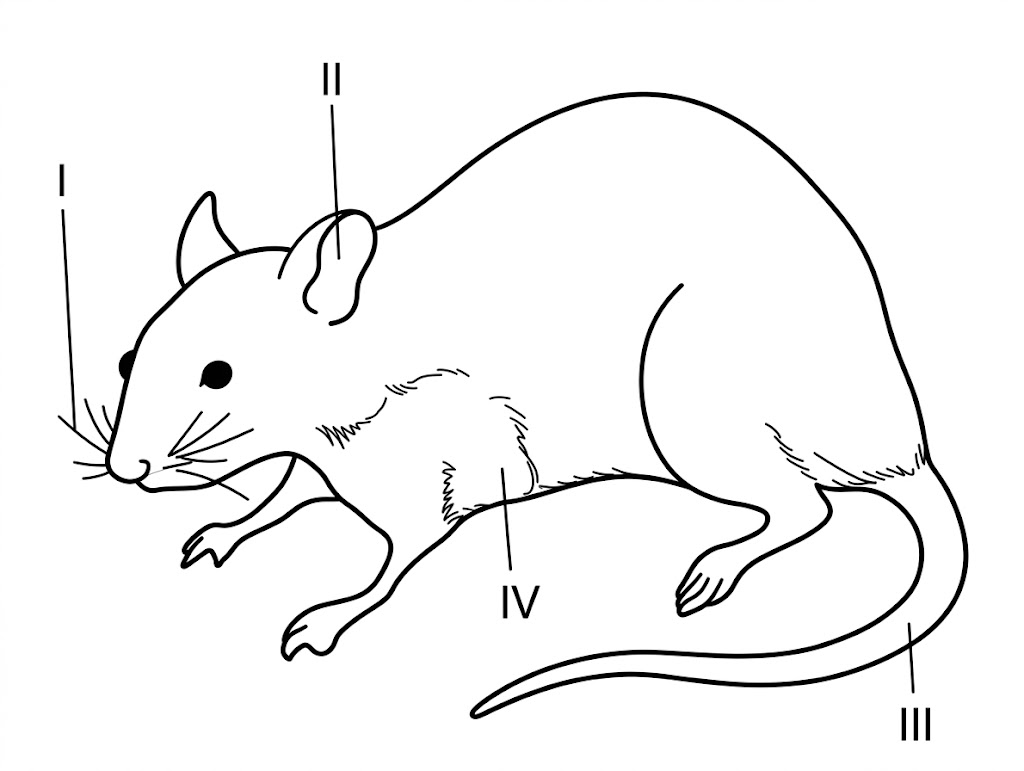
C. Countershading colouration
The animal shows a darker upper side and lighter underside, which helps it blend with the environment when viewed from above or below. This is a form of countershading, a common protective adaptation in many animals.
Not clear enough?
Question 32
Use the diagram above to answer this question. The structure labelled I is
D. Tactile.
Vibrissae, also known as whiskers, are specialized hairs found on the faces of many mammals, including rats. They are highly sensitive to touch and play a crucial role in:
- Spatial awareness and navigation
- Detecting objects and obstacles
- Measuring distances and textures
Rats use their vibrissae to gather information about their environment and make precise movements.
Not clear enough?
Question 33
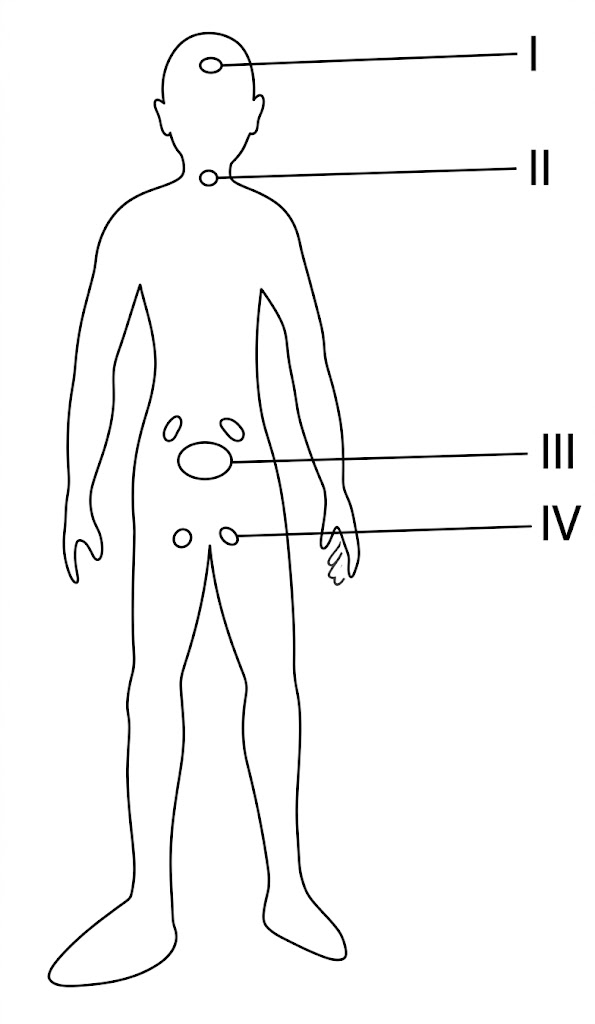
Use the diagram above to answer this question. Insulin is produced by the endocrine organ labelled
B. III
Insulin is produced by the pancreas gland; specifically, by the beta cells within the pancreas. The pancreas is a gland located behind the stomach, and its primary function is to regulate blood sugar levels by producing insulin and glucagon hormones.
Not clear enough?
Question 34
B. Only one cell of the original organism is needed to initiate the cloning process. In cloning, a single somatic cell can be used to produce a genetically identical organism, which is the foundation of modern cloning techniques.
Not clear enough?
Question 35
D. Possession of facial hair in adult humans is a sex-linked trait, typically associated with genes on the X or Y chromosome, leading to phenotypic differences between males and females.
Not clear enough?
Question 36
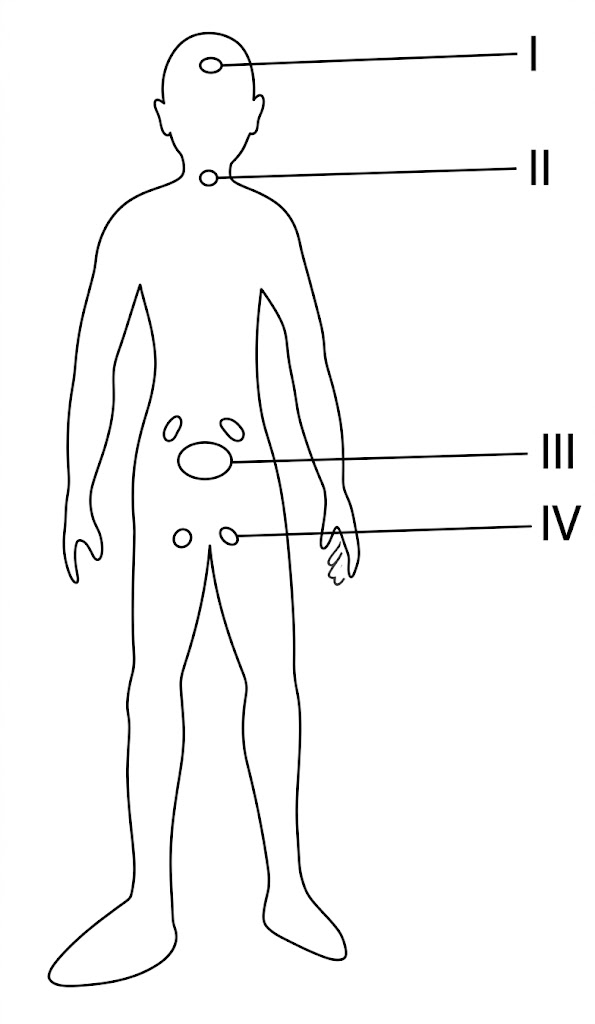
D. The structure labelled I is a major endocrine gland that regulates the activities of other endocrine glands, coordinating hormonal balance throughout the body.
Not clear enough?
Question 37

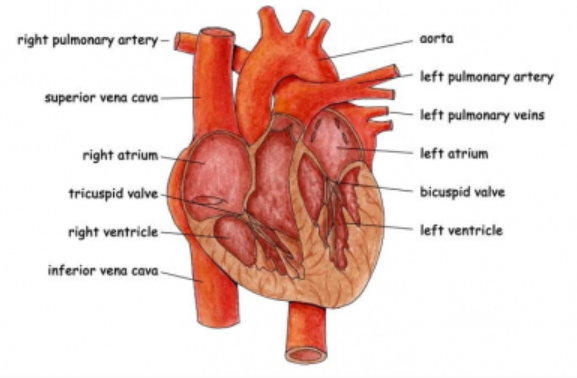
Use the diagram above to answer this question. Oxygenated blood is pumped to the entire body from the part labelled
| RIGHT ATRIUM (II) | LEFT ATRIUM (I) |
| RIGHT VENTRICLE (III) | LEFT VENTRICLE (IV) |
- The part labelled iv is the LEFT VENTRICLE
-The left atrium receives the now oxygen-rich blood from the lungs and pumps it into the left ventricle. The left ventricle pumps the oxygen-rich blood to the body through a large network of arteries.
Not clear enough?
Question 38
Use the diagram above to answer this question. The part labelled I is the
Not clear enough?
Question 39
A. The part labelled IV is the nephridium of the earthworm, which is responsible for osmoregulation and excretion.
Not clear enough?
Question 40
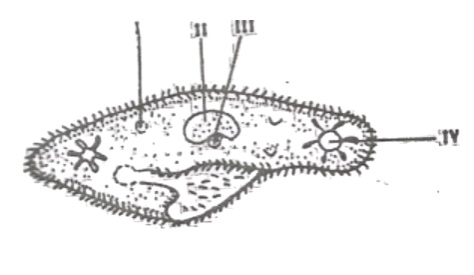
Use the diagram above to answer this question. The organelle responsible for sexual reproduction is
The part of a paramecium used for reproduction is the micronucleus. While paramecium has two nuclei, the larger macronucleus controls daily functions, while the smaller micronucleus is responsible for storing genetic material and is involved in sexual reproduction. The part labelled III is the micronucleus.
Not clear enough?
You might like
This question is based on SECOND CLASS CITIZEN.
"She swallowed it all, just like a nasty pill." The literary device employed here is
In which year(s) did Make Fit Ltd and Pure Gap plc’s combined IT consultancy income exceed £6 million?
Noise level heard inside a bus in busy city traffic or inside a sub-way train corresponds to about __________ decibels.