Biology 2024 Jamb Examination

Biology 2024 Jamb Examination

Available Sections
2. Career
4. Job
1234...12

Question 1

Consider the photosynthesis equation:
                         I
6X  +  6H₂O  →  C₆H₁₂O₆  +  6O₂
III             chlorophy    ll              IV

The part labelled I is
Show explanation Expand Question
In the photosynthesis equation, the input labelled I refers to sunlight, which provides the energy required to drive the reaction. Water (H₂O) and carbon dioxide (CO₂) are also reactants, but in this case, the labeling indicates sunlight as the driving factor alongside chlorophyll.
Not clear enough?

Question 2

Bilateral symmetry, cylindrical bodies and double openings are characteristic features of
Show explanation Expand Question
Nematodes (roundworms) exhibit bilateral symmetry, possess cylindrical elongated bodies, and have a complete digestive system with a mouth and an anus. Hydra and protozoa lack this complete digestive tract, and protists is too broad a category.
Not clear enough?

Question 3

Mouth part adapted for piercing and sucking is found in
Show explanation Expand Question
Mosquitoes have specialized mouthparts adapted for piercing the skin and sucking blood or plant fluids. Houseflies have sponging mouthparts, grasshoppers have biting and chewing mouthparts, and cockroaches have chewing mouthparts.
Not clear enough?

Question 4

The web-feet of frogs and toads is basically for
Show explanation Expand Question
The webbed feet of frogs and toads serve as an adaptation for swimming by increasing the surface area for propulsion in water. While frogs also leap, the webs specifically aid aquatic locomotion.
Not clear enough?

Question 5

The part of the inner ear that is responsible for hearing is
Show explanation Expand Question
The cochlea is the spiral-shaped structure in the inner ear responsible for detecting sound vibrations and converting them into electrical impulses that are transmitted to the brain via the auditory nerve. The sacculus and utriculus are associated with balance, and the ampullae detect rotational movement.
Not clear enough?

Question 6

The major building block of an organism is...
Show explanation Expand Question
Carbon is the primary building block of life because it forms the backbone of organic molecules such as carbohydrates, proteins, lipids, and nucleic acids. Its ability to form four covalent bonds makes it highly versatile in building complex molecules essential for life. While nitrogen, water, and sulphur are also vital, they play secondary roles compared to carbon.
Not clear enough?

Question 7

The process by which plants lose water to the atmosphere is
Show explanation Expand Question
Transpiration is the process by which plants lose water in the form of water vapor through small openings in their leaves called stomata. It is a vital process for regulating plant temperature, maintaining nutrient transport, and sustaining the flow of water from roots to shoots. Guttation, on the other hand, is the exudation of water droplets from leaves, and translocation refers to the movement of food substances. Evaporation is a physical process not specific to plants.
Not clear enough?

Question 8

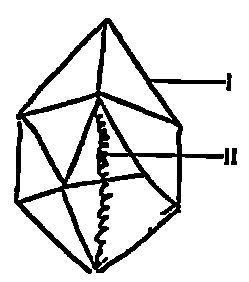
Use the diagram above to answer the question that follows
Use the diagram above to answer the question that follows The organism belongs to kingdom
Show explanation Expand Question

The diagram represents a virus. Viruses are obligate parasites, which means they cannot generate their own energy or produce proteins independently. To replicate, they invade a host cell and exploit the cell's machinery to synthesise their nucleic acids and proteins. Additionally, viruses utilise the host's lipids and carbohydrate chains to form their membranes and glycoproteins. This method of replication often damages the host cell, potentially causing disease or cell death. Viruses typically gain entry into the body through mucous membranes, such as those in the eyes, nose, mouth, or genital and anal openings.

Viruses are distinct from plants, animals, and bacteria and are usually placed in a separate classification. For this question, however, because many of their features resemble those of bacteria in terms of metabolic activity, the correct choice is option A – Monera.

Not clear enough?

Question 9

The formation of cilia and flagella in living cells is carried out with the help of
Show explanation Expand Question
Centrioles are specialized cell structures made of microtubules that play a crucial role in the formation of cilia and flagella. These organelles are responsible for cell motility and movement of substances across cell surfaces. Ribosomes are involved in protein synthesis, lysosomes in intracellular digestion, and plastids in photosynthesis and storage, making them unrelated to cilia and flagella formation.
Not clear enough?

Question 10

The food nutrient with the highest energy value is
Show explanation Expand Question
Lipids (fats and oils) provide the highest energy value among food nutrients. They yield about 9 kilocalories per gram, which is more than double the energy provided by carbohydrates and proteins (4 kilocalories per gram each). Minerals do not provide energy but are essential for metabolic functions and structural support.
Not clear enough?

1234...12
In this page
Biology 2024 Jamb Examination
Open Model!