
Biology 2025 Jamb Examination
Biology 2025 Jamb Examination

Question 11
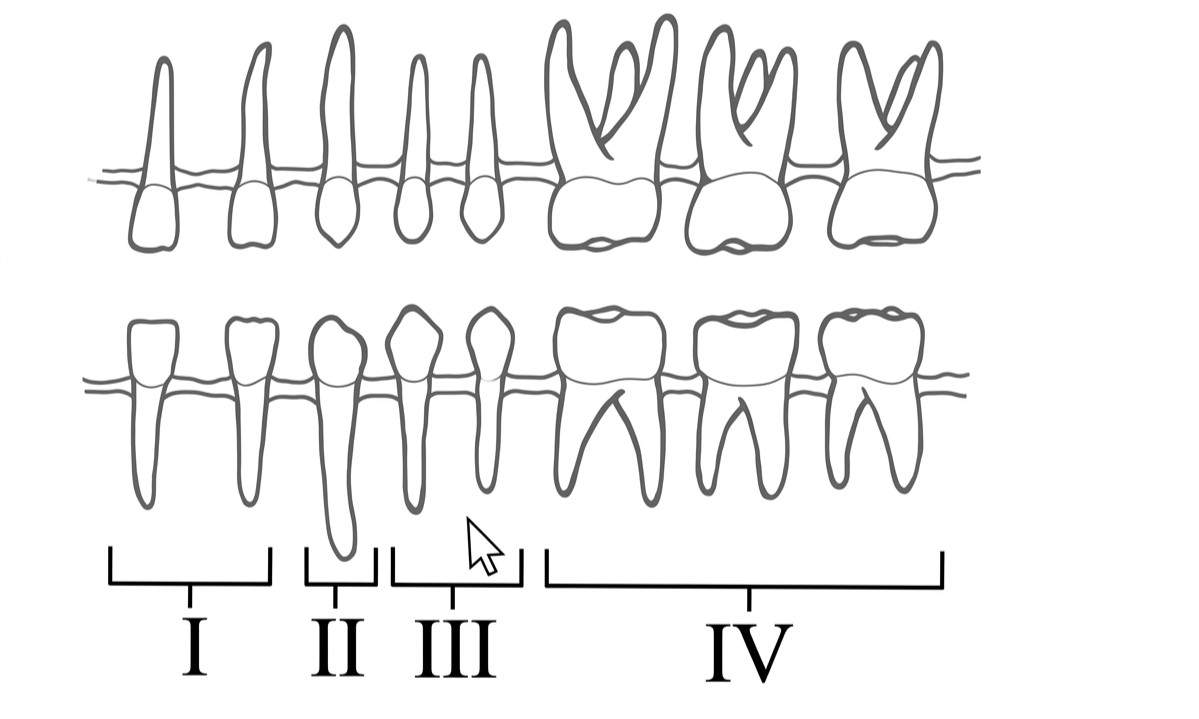
The type of teeth used for tearing in man is labelled
In the human dentition, the canines are specifically adapted for tearing food. Based on the standard arrangement in such diagrams, the canine is usually pointed and sits between the incisors and premolars. If label II points to the sharp, pointed tooth, it represents the canine.
Not clear enough?
Question 12
Which of these animals create their natural habitats in burrows?
The bush rat is a fossorial animal, meaning it is adapted to digging and living underground in burrows. This provides protection from predators and extreme environmental conditions. Doves are arboreal (trees), chameleons are also mostly arboreal, and snails often seek shade or leaf litter rather than digging complex burrows.
Not clear enough?
Question 13
The green-brown colour of grasshopper's body in dry grass field is an adaptation for
This is a classic example of camouflage (concealing coloration). By matching the color of its environment (the dry grass), the grasshopper becomes difficult for predators to spot, increasing its chances of survival.
Not clear enough?
Question 14
Which of the following is an advantage of cross fertilization?
Cross-fertilization (allogamy) promotes genetic variation by combining DNA from two different parents. This genetic diversity often results in healthier, more vigorous offspring (hybrid vigor) that are better equipped to survive changing environmental conditions compared to self-fertilized offspring.
Not clear enough?
Question 15
In most vertebrates, the common basic plan with a skull, vertebral column and a pair of girdle is an evidence of evolution from
Comparing the physical structures of different organisms to find similarities in their 'basic plan' (homologous structures) is the study of comparative anatomy. It suggests that these organisms shared a common ancestor from which they inherited these skeletal frameworks.
Not clear enough?
Question 16
Example of animal exhibiting mating colouration is
Mating colouration is a form of sexual selection where one sex (usually the male) develops bright or distinct colours to attract a mate. The male agama lizard is a classic example; during the breeding season, its head turns a brilliant orange or red, and its body becomes bright blue. This serves as a visual signal of health and dominance to females and a warning to rival males, whereas the chameleon's colour change is primarily for camouflage or mood expression rather than specific seasonal mating patterns.
Not clear enough?
Question 17
Which of the following is the excretory organ in birds?
Birds, like mammals and reptiles, use kidneys as their primary excretory organs to filter waste from the blood. However, birds are uricotelic, meaning they convert nitrogenous waste into uric acid to conserve water, which is excreted as a white paste. In contrast, Nephridia are found in earthworms, Malpighian tubules are found in insects, and Green glands (antennal glands) are the excretory organs of crustaceans like crayfish.
Not clear enough?
Question 18
Whose theory of evolution supports that characters acquired through use or disuse are transmitted to offspring?
Jean-Baptiste Lamarck proposed the theory of 'Inheritance of Acquired Characteristics.' He argued that if an organism used a body part more frequently (like a giraffe stretching its neck to reach high leaves), that part would develop further, and this new trait would be passed down to the next generation. While Darwin focused on Natural Selection and Mendel on genetics, Lamarck's theory was later disproven because phenotypic changes acquired during a lifetime do not typically alter the genetic information (DNA) passed to offspring.
Not clear enough?
Question 19
The most suitable soil for crops cultivation in Nigeria is
Loamy soil is considered the best for general crop cultivation because it is a balanced mixture of sand, silt, and clay. It possesses excellent 'tilt' or structure, meaning it has enough pore space to hold adequate air and water while also being rich in organic matter (humus). Sandy soil drains too quickly and lacks nutrients, while clayey soil becomes waterlogged and is difficult for roots to penetrate. Loam provides the ideal physical and chemical environment for most Nigerian staples like maize, yams, and cassava.
Not clear enough?
Question 20
When calyx of a flower is joined together, it is called
The calyx is the outermost whorl of a flower, made up of individual units called sepals. When these sepals are fused or joined together to form a tube-like structure, the condition is termed gamosepalous. If the sepals are free and separate from each other, it is called polysepalous. Similarly, 'gamopetalous' refers to fused petals, and 'polypetalous' refers to free petals. Understanding these botanical terms is essential for plant identification and classification.
Not clear enough?
You might like
Each of the questions below consists of two words that have a certain relationship to each other.
Select the pair of words.
ARBORETUM : TREES
'The fair breeze blew
The white foam flew
The furrow followed free
We were the first that ever burst into that silent sea.'
The dominant figure of speech in the above passage is