Economics 2018 Jamb Examination
Economics 2018 Jamb Examination

Question 41
| X | F |
|---|---|
| 8 | 2 |
| 10 | 1 |
| 12 | 4 |
| 16 | 3 |
| 18 | 3 |
| 20 | 1 |
| 24 | 6 |
From the table, calculate the median___________
Total frequency \(N=2+1+4+3+3+1+6=20\).
For an even number of observations the median is the average of the \(\tfrac{N}{2}\)th and the \(\tfrac{N}{2}+1\)th values, i.e. the 10th and 11th values.
Construct the cumulative frequencies: 8 (positions 1–2), 10 (3), 12 (4–7), 16 (8–10), 18 (11–13), 20 (14), 24 (15–20).
The 10th value = 16 and the 11th value = 18.
Median = \(\dfrac{16+18}{2}=17\).
Not clear enough?
Question 42
The expression of cost in terms of alternative forgone is referred to as ____?
Opportunity cost is defined as the value of the next best alternative forgone when a choice is made.
It captures the trade-off inherent in allocation decisions and expresses cost in terms of what must be given up to obtain something else.
Thus option C correctly names this concept.
It captures the trade-off inherent in allocation decisions and expresses cost in terms of what must be given up to obtain something else.
Thus option C correctly names this concept.
Not clear enough?
Question 43
The full meaning of NAPEP is?
NAPEP stands for National Poverty Eradication Programme, a social intervention initiative aimed at reducing poverty through job creation, skills acquisition and support for small-scale enterprises.
Hence option A expands the acronym correctly.
Hence option A expands the acronym correctly.
Not clear enough?
Question 44
Taxes and government expenditures are instruments of____________
Taxes and government spending are the two primary tools of fiscal policy used by governments to influence aggregate demand, redistribute income and stabilise the economy.
Monetary policy uses interest rates and money supply, so the correct classification for taxes and expenditures is fiscal policy.
Monetary policy uses interest rates and money supply, so the correct classification for taxes and expenditures is fiscal policy.
Not clear enough?
Question 45
As a factor of production, the reward for land is?
The payment made to the owner of land for its use is called rent.
Profit is the reward to entrepreneurship, interest to capital, and wages to labour, so rent correctly corresponds to land.
Profit is the reward to entrepreneurship, interest to capital, and wages to labour, so rent correctly corresponds to land.
Not clear enough?
Question 46

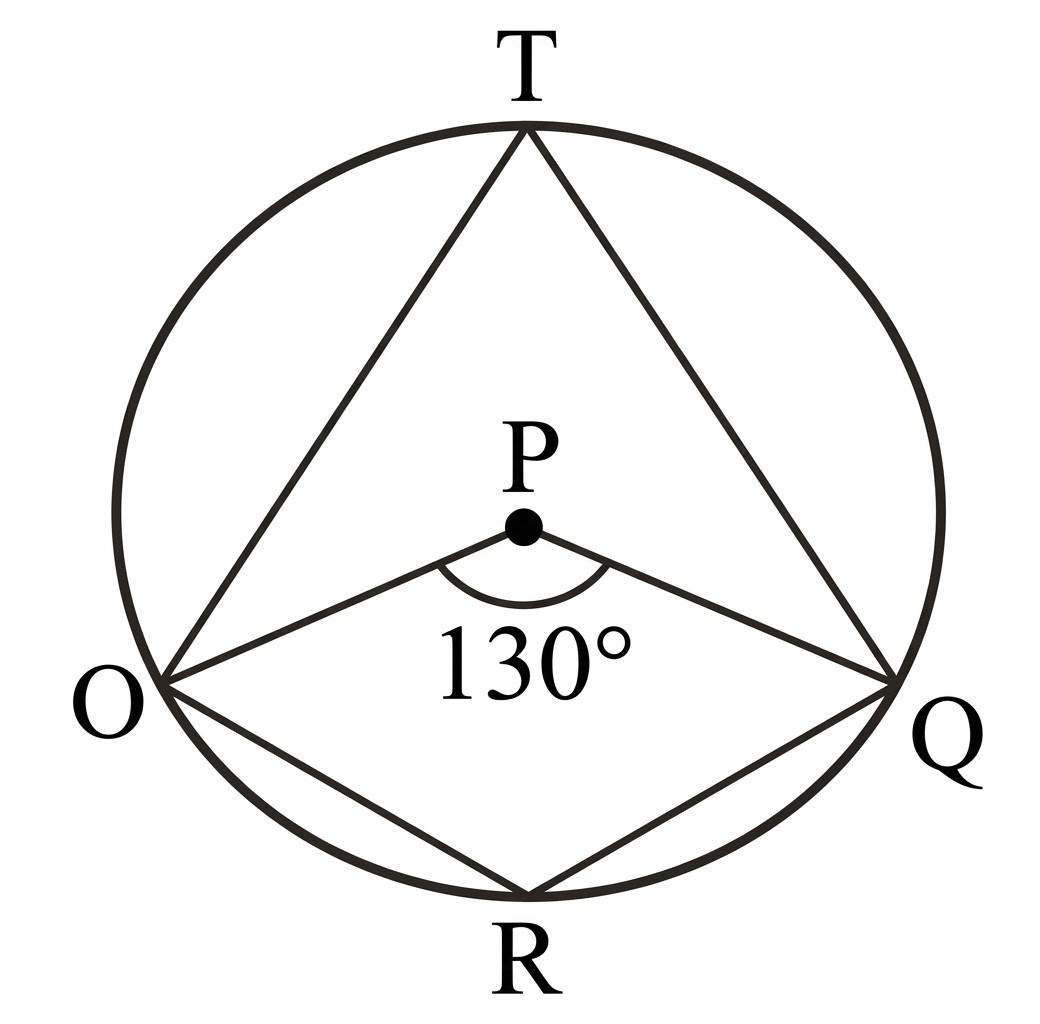
The diagram below represents a production function. At which of the points does diminishing returns set in __________
Diminishing returns set in at the point where the marginal product of the variable input begins to decline while remaining positive.
On the typical production function diagram this occurs after the point of increasing marginal returns and before total product peaks.
Point T marks the start of the decline in marginal returns, so it indicates where diminishing returns set in.
On the typical production function diagram this occurs after the point of increasing marginal returns and before total product peaks.
Point T marks the start of the decline in marginal returns, so it indicates where diminishing returns set in.
Not clear enough?
Question 47
The two major types of international trade are Bilateral trade and?
International trade can take place between two countries (bilateral) or among three or more countries (multilateral).
Multilateral trade involves multiple nations agreeing to trade terms or participating in trade blocs, which distinguishes it from bilateral arrangements.
Multilateral trade involves multiple nations agreeing to trade terms or participating in trade blocs, which distinguishes it from bilateral arrangements.
Not clear enough?
Question 48
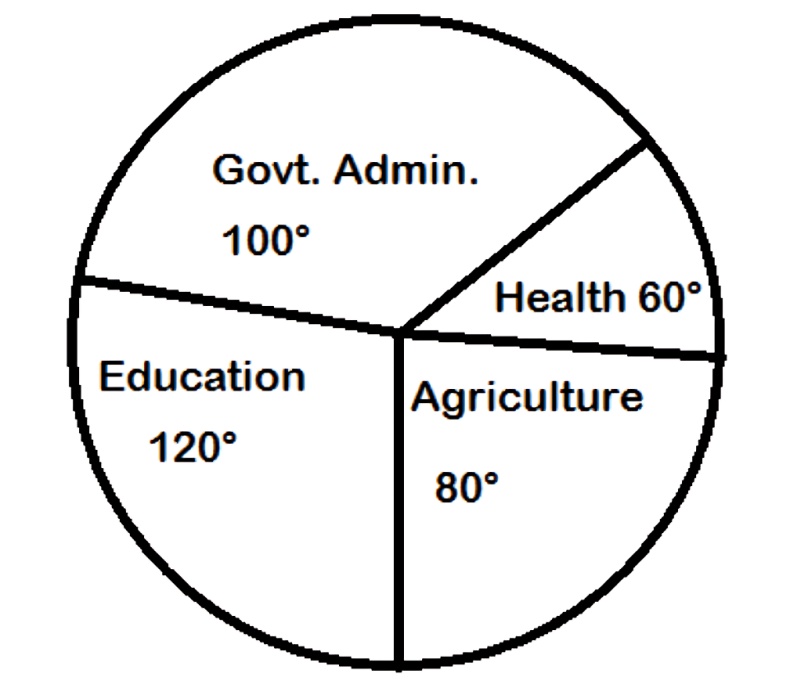
A country's budget allocation to various sectors of the economy is shown in the pie chart.
If the budget of the country was \$7,200.00, how much is allocated to education?
Allocation to Education:
\$7,200.00 × \(\tfrac{120}{360}\) = \$2,400.00.
\$7,200.00 × \(\tfrac{120}{360}\) = \$2,400.00.
Not clear enough?
Question 49
In a capitalist economy, factors of production are owned and controlled by the _____?
In a capitalist system private individuals and business enterprises predominantly own and control the factors of production.
While citizens broadly hold ownership rights, the emphasis in capitalism is on private entrepreneurs and business people who control investment and production decisions.
Hence 'business men' best captures the private ownership and control feature of capitalism.
While citizens broadly hold ownership rights, the emphasis in capitalism is on private entrepreneurs and business people who control investment and production decisions.
Hence 'business men' best captures the private ownership and control feature of capitalism.
Not clear enough?
Question 50
Efficiency of labour in a country is determined by the following except the____________
Labour efficiency depends on factors that affect workers' productivity such as education and training, social attitudes toward work and the conditions under which they work.
Total population is not a direct determinant of individual labour efficiency; it is a demographic measure rather than a productivity driver.
Therefore option C is not a direct determinant of labour efficiency.
Total population is not a direct determinant of individual labour efficiency; it is a demographic measure rather than a productivity driver.
Therefore option C is not a direct determinant of labour efficiency.