
Physics 2015 Jamb Examination
Physics 2015 Jamb Examination

Question 51
The r.m.s value of a supply voltage is quoted at 200v. What is the approximate peak value of the voltage?
For a sinusoidal alternating current (AC) supply, the relationship between the root-mean-square (r.m.s) voltage and the peak voltage (\(V_0\)) is defined by the following formula:\[ V_{\text{rms}} = \frac{V_0}{\sqrt{2}} \]Given:
\(V_{\text{rms}} = 200\text{V}\)
We can solve for the peak value (\(V_0\)):\[ V_0 = V_{\text{rms}} \times \sqrt{2} \]\[ V_0 = 200 \times 1.4142 \]\[ V_0 \approx 282.84\text{V} \]Rounding to the nearest whole number, the peak value is approximately 283 volts.
\(V_{\text{rms}} = 200\text{V}\)
We can solve for the peak value (\(V_0\)):\[ V_0 = V_{\text{rms}} \times \sqrt{2} \]\[ V_0 = 200 \times 1.4142 \]\[ V_0 \approx 282.84\text{V} \]Rounding to the nearest whole number, the peak value is approximately 283 volts.
Not clear enough?
Question 52
Heat transfer by convection will take place in one the following substance.
Convection is the primary mode of heat transfer in fluids (liquids and gases) because it requires the actual movement of the heated particles. Stone and wood are solids, so heat travels through them primarily via conduction. While Mercury is a liquid metal, it is an exceptional conductor, but the question asks where convection 'will' take place as a characteristic property. Water is the classic example of a fluid where convection currents are easily established during heating. As water is heated, it becomes less dense and rises, while cooler, denser water sinks, creating a convection cycle.
Not clear enough?
Question 53
A regular spacing or arrangement of atoms in a crystalline material is called
Crystalline solids are characterized by a highly ordered internal structure. The repeating, three-dimensional geometric arrangement of atoms, ions, or molecules within a crystal is known as a crystal lattice. This lattice determines the external shape and physical properties of the crystal. An 'orbit' refers to the path of an electron around a nucleus, 'atomic structure' refers to the internal components of a single atom, and 'energy levels' describe the specific quantized energies an electron can have.
Not clear enough?
Question 54
The net movement of solvent molecules from a region of high solvent potential to a region of lower solvent potential through a partially or semi permeable membrane is refer to as
Osmosis is a specific type of diffusion that involves the movement of solvent molecules (usually water) across a semi-permeable membrane. The molecules move from a solution with a higher water potential (more dilute) to a solution with a lower water potential (more concentrated) until equilibrium is reached. General diffusion does not require a membrane and applies to any particles, while osmosis is restricted to solvent movement through a barrier.
Not clear enough?
Question 55
The eyeball consists of a round tough white skin called
The human eye is protected by an outer layer of tough, fibrous tissue. The white, opaque part of this outer layer that covers the majority of the eyeball is called the sclerotic layer (or sclera). It maintains the shape of the eye and provides attachment points for the muscles that move it. The choroid is the vascular layer beneath the retina, optical fibers are artificial components used in communications, and accommodation is the process by which the lens changes focus.
Not clear enough?
Question 56
Which one of the following is a vector quantity?
A vector quantity is one that possesses both magnitude and direction. Mass, work, and time are all scalar quantities because they are fully defined by a single numerical value (magnitude). A 'temperature gradient' describes how the temperature changes most rapidly around a particular location; it has both a rate of change (magnitude) and a specific direction in which that change occurs. Therefore, it is mathematically treated as a vector quantity.
Not clear enough?
Question 57
Efficiency of a transformer is equal to
The efficiency of any energy-converting device is defined as the ratio of useful power output to total power input. For a transformer, the power input is supplied to the primary coil, and the power output is developed in the secondary coil.
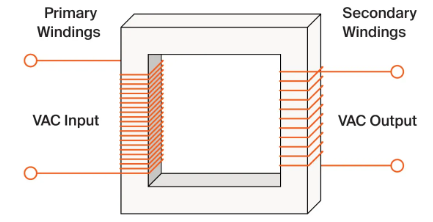
Therefore, the efficiency (\(\eta\)) is calculated as:\[ \eta = \frac{\text{Power in secondary (Output)}}{\text{Power in primary (Input)}} \times 100\% \]Option C describes the turns ratio, which determines the voltage change but not the efficiency.
Therefore, the efficiency (\(\eta\)) is calculated as:\[ \eta = \frac{\text{Power in secondary (Output)}}{\text{Power in primary (Input)}} \times 100\% \]Option C describes the turns ratio, which determines the voltage change but not the efficiency.
Not clear enough?
Question 58
Volatile liquids usually
Volatility refers to the tendency of a substance to vaporize. Liquids that evaporate easily at room temperature are described as volatile. This characteristic is a direct result of weak intermolecular forces within the liquid, which means that relatively little thermal energy is required to break these bonds and turn the liquid into a gas. Consequently, volatile liquids possess low boiling points. Examples include ether, petrol, and many alcohols.
Not clear enough?
Question 59
When a man moves toward a plane mirror at a speed of 6m/s, the distance the man and his image increased at a speed of?
In a plane mirror, the image is always at the same distance behind the mirror as the object is in front of it. If a man moves towards the mirror at a speed \(v = 6\text{ m/s}\), his image also moves towards the mirror from the opposite side at the same speed \(v = 6\text{ m/s}\). The relative speed at which the man and his image approach each other is the sum of their individual speeds:\[ \text{Relative Speed} = v_{\text{object}} + v_{\text{image}} \]\[ \text{Relative Speed} = 6\text{ m/s} + 6\text{ m/s} = 12\text{ m/s} \]Although the question uses the word 'increased', in the context of moving towards a mirror, the rate of change of the total distance between them is 12 m/s.
Not clear enough?
Question 60
Which of the following instrument is most accurately for comparing electromotive force (e.m.f) of two cells?
The potentiometer is the most accurate instrument for comparing the e.m.f. of two cells because it operates on a 'null method'. Unlike a voltmeter, which draws some current from the cell to show a reading (thereby measuring terminal potential difference rather than true e.m.f. due to internal resistance), the potentiometer measures the potential difference when no current is flowing from the cell being tested. At the balance point, the e.m.f. of the cell is exactly balanced by the potential drop across a portion of the potentiometer wire, ensuring a measurement independent of the cell's internal resistance.
Not clear enough?
You might like
Choose the option nearest in meaning to the underlined word.
Today's weather is favourable for a game of tennis.
Name the completion method which uses limited entry to a formation in order to stay away from unwanted reservoir fluids?
Choose the option opposite in meaning to the word blight.
It is important not to let mistakes blight your life
what is likely to happen if the glass of a thermometer expands more upon heating than the liquid inside?
What part of the central processing unit coordinates other units and manages the computer resources ?