
Biology 2017 Jamb Examination
Biology 2017 Jamb Examination

Question 41
Coloration of the eye is ______ variation
Eye color is an example of morphological variation because it involves a visible structural characteristic of an individual. Morphological variations are those differences in the physical traits, shape, size, or appearance of organisms within a species.
Not clear enough?
Question 42
Which of the following choices correctly describes the composition of the cell membrane?
The cell membrane is composed primarily of a lipid bilayer interspersed with proteins. Lipids provide structural integrity and fluidity, while proteins serve as channels, receptors, and enzymes, facilitating selective transport and communication between cells and their environment.
Not clear enough?
Question 43
The feeding relationship among a set of members of a community is referred to as _______?
A food chain represents the linear sequence of organisms through which energy and nutrients flow in a community. Each organism feeds on the preceding one, demonstrating the dependency of consumers on producers and other consumers in an ecosystem.
Not clear enough?
Question 44
Nitrogen is released into the atmosphere when ________
Nitrogen gas is released naturally into the atmosphere during lightning strikes, which convert atmospheric nitrogen into compounds like nitrates. This process, part of the nitrogen cycle, replenishes the nitrogen available for plant and microbial use, supporting ecosystem productivity.
Not clear enough?
Question 45
Size, colour and fingerprints are examples of ______
These traits are morphological variations because they refer to the structural or physical differences among individuals. Morphological variations are observable and measurable features like size, shape, color, and unique patterns such as fingerprints, contributing to diversity within a species.
Not clear enough?
Question 46
The biome that is characterized with large herbivores, few and scattered fire resistant trees is
Savannas are grassland ecosystems with scattered trees, large herbivores, and periodic fires. The vegetation and animal life are adapted to dry and wet seasons, making them distinct from dense tropical forests, montane forests, or arid deserts.
Not clear enough?
Question 47
Red blood cells are also known as _________?
Red blood cells, or erythrocytes, are specialized cells responsible for transporting oxygen from the lungs to tissues and carrying carbon dioxide back. Their biconcave shape increases surface area, facilitating efficient gas exchange and oxygen delivery throughout the body.
Not clear enough?
Question 48
The joint between the femur and tibia is known as ________?
The joint between the femur and tibia is a hinge joint, allowing movement primarily in one plane, such as flexion and extension. This structural adaptation provides stability and support for locomotion while bearing body weight efficiently.
Not clear enough?
Question 49
What is the primary function of cofactors?
Cofactors are non-protein chemical compounds, such as metal ions or organic molecules, that assist enzymes in catalyzing reactions. They may help stabilize enzyme structure, participate in reactions, or bind substrates, enhancing enzyme efficiency and activity.
Not clear enough?
Question 50
Use the diagram below to answer the question that follow:
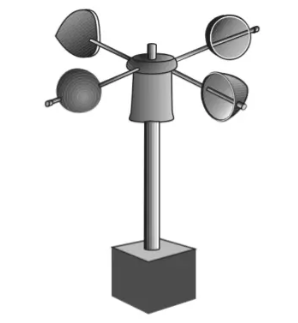
The diagram represents a
The diagram represents a
The diagram shows an anemometer, which is an instrument used to measure wind speed. Anemometers are critical in meteorology and environmental studies, helping monitor weather conditions, assess energy potential for wind turbines, and study climate patterns.
Not clear enough?
You might like
A substance has half-life of 3 min. After 6 min, the count rate was observed to be 400. What was its count rate at zero time?
Which of the following is NOT typically a clinical characteristic of Hurler's syndrome (Mucopolysaccharidosis Type I)?
One fill pipe A is 3 times faster than second fill pipe B and takes 32 minutes less than the fill pipe B. When will the cistern be full if both pipes are opened together ?
Which stage of the SDLC involves evaluating the system to ensure it meets user needs and making necessary adjustments?