
Biology 2024 Jamb Examination
Biology 2024 Jamb Examination

Question 101
The endocrine gland that is called the master gland is the
The pituitary gland is termed the 'master gland' because it secretes hormones that regulate the activities of other endocrine glands, controlling growth, metabolism, and reproductive functions. Thyroid, pancreas, and adrenal glands have specific roles but are regulated in part by the pituitary.
Not clear enough?
Question 102
Which of the following characteristics is possessed by both living and non-living things?
Both living and non-living things have weight, as weight is a property of matter. Life, aging, or dying are exclusive to living things, and having no shape does not apply universally.
Not clear enough?
Question 103
Infectious diseases are caused by
Infectious diseases can be caused by bacteria, protozoa, viruses, and fungi. Amoeba is a specific genus of protozoa, and protists is a broader category; bacteria are the correct general answer here.
Not clear enough?
Question 104
The cell organelle responsible for the synthesis of protein is the
Ribosomes are the organelles responsible for protein synthesis. They translate mRNA into polypeptide chains. Centrioles are involved in cell division, vacuoles store substances, and plastids are involved in photosynthesis and storage.
Not clear enough?
Question 105
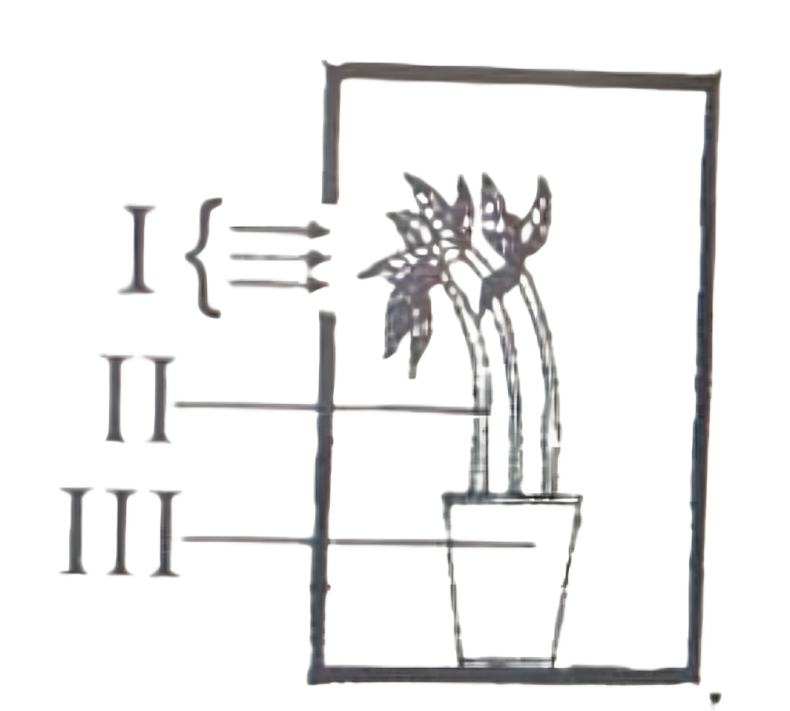
Use the diagram above to answer the question that follows
The diagram demonstrates
The diagram shows a plant bending toward light, which is an example of phototropism. Thigmotropism is response to touch, geotropism is growth in response to gravity, and hydrotropism is growth toward water.
Not clear enough?
Question 106
Which of the following factors can lead to overcrowding?
High natality increases the number of individuals in a population, which can lead to overcrowding if resources are limited. Emigration reduces population size, high mortality decreases population, and competition is a result of overcrowding rather than a direct cause.
Not clear enough?
Question 107
The common examples of trees found in the desert are
Baobab and cacti are adapted to arid desert conditions with features like water storage, thick bark, and reduced leaves. Raffia palm, coconut, and mangroves are found in tropical or swampy environments, not deserts.
Not clear enough?
Question 108
If the F1 generation allows for self-pollination, what will be the genotypic ratio of the offspring?
When a heterozygous F1 plant (Rr) self-pollinates, the offspring genotypes follow Mendelian inheritance: RR, Rr, Rr, and rr. This gives a genotypic ratio of 1:2:1.
Not clear enough?
Question 109
The resemblance of an organism to another organism as means of enhancing it's chances of survival in its habitat is known as
Mimicry is an adaptive strategy where an organism resembles another species to avoid predation or enhance survival. Counter shading is color adaptation, protective coloration is camouflage, and warning coloration signals danger.
Not clear enough?
Question 110
The urinary tubules opens into a proximal convoluted tubule coils to form distal by making a
The nephron forms a U-shaped loop called the loop of Henle, which connects the proximal and distal convoluted tubules. This structure is essential for water and salt reabsorption in the kidney.
Not clear enough?
You might like
Using real time data a driller can calculate the amount of energy required per unit 30 volume of rock drilled in kilopound force per square inch. Name this parameter.
The primary storage device in the computer that holds essential start-up data and instructions permanently is:
An object of mass 13 kg is moving with a uniform velocity of 5 ms-1. What is the kinetic energy possessed by the object ?