Biology 2025 Jamb Examination

Biology 2025 Jamb Examination

Available Sections
2. Career
4. Job
1...45678...12

Question 51

An instrument used in measuring plants growth is
Show explanation Expand Question
An auxanometer is a specialized laboratory instrument used to measure the increase in length or height of a plant over time. It typically works by using a pulley system or a lever to record the vertical growth of a stem. In contrast, a hygrometer measures humidity, a barometer measures atmospheric pressure, and a thermometer measures temperature.
Not clear enough?

Question 52

Chlamydomonas belongs to the phylum
Show explanation Expand Question
Chlamydomonas is a genus of unicellular green algae. In older classification systems often used in biology curricula, it is placed under Protophyta (primitive plants or plant-like protists). It is distinct from Tracheophyta (vascular plants), Pteridophyta (ferns), and Bryophyta (mosses), all of which are multicellular and more complex.
Not clear enough?

Question 53

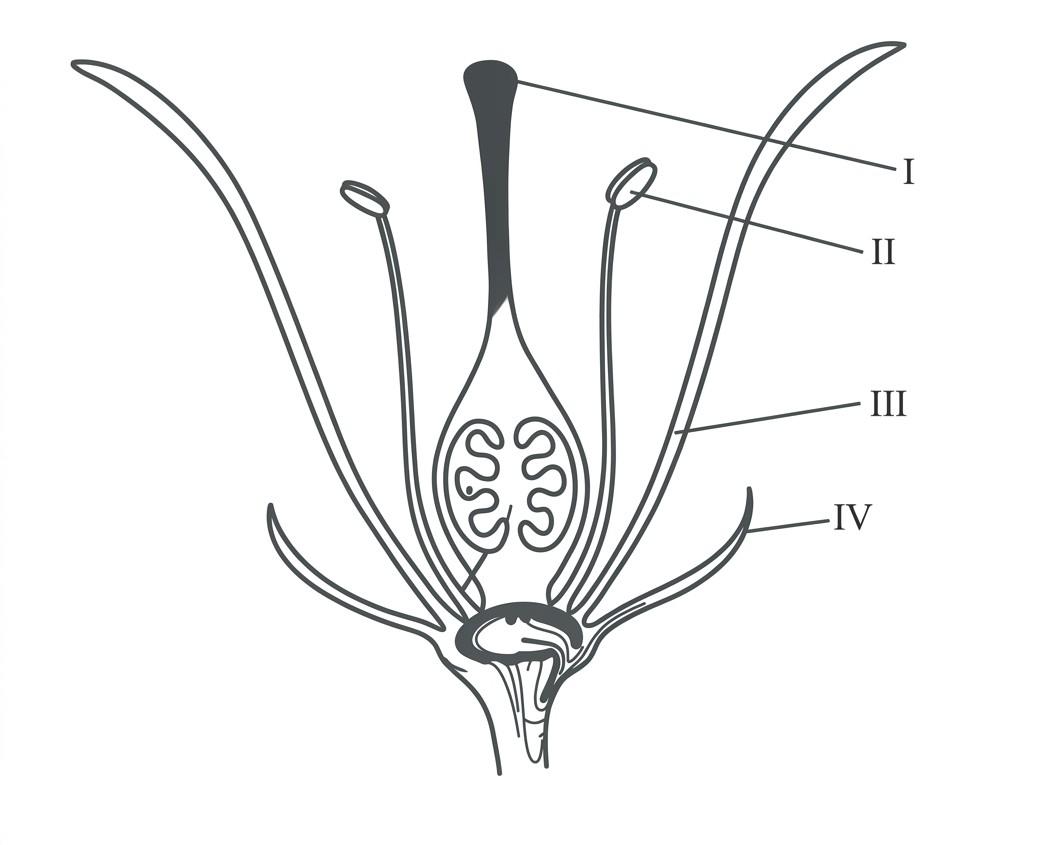
Diagram of a flower showing various parts labelled I to IV
The part of the flower that is brightly coloured and attract pollinating agents such as insects is labelled
Show explanation Expand Question

The petals (collectively known as the corolla) are the brightly coloured parts of a flower that attract insects and other pollinators. These modified leaves often feature, bright colors, patterns, and scents to lure insects for pollination. The part is labelled III - option A

I - stigma

II - Anther

III - petals

IV - sepals

Not clear enough?

Question 54

Which of the following blood groups will clump when mixed with anti-a antibody serum?
Show explanation Expand Question
Agglutination (clumping) occurs when an antibody reacts with its corresponding antigen. Anti-A serum contains antibodies that attack 'A' antigens. Therefore, any blood group that possesses the A antigen on its red blood cells will clump. This includes Blood Group A (which has A antigens) and Blood Group AB (which has both A and B antigens). Blood groups B and O do not have the A antigen and will not react with anti-A serum.
Not clear enough?

Question 55

Which of these is the correct arrangement of tissues in herbaceous roots from the circumference to the center?
Show explanation Expand Question
The anatomical structure of a herbaceous root, moving from the outside (circumference) to the inside (center), follows a specific sequence:
1. Piliferous layer (the outermost epidermis with root hairs).
2. Cortex (large storage parenchyma cells).
3. Endodermis (not listed here, but follows the cortex).
4. Pericycle (the layer just inside the endodermis).
5. Vascular tissue (Xylem and Phloem).
6. Pith (the central core, though in many dicot roots, the xylem occupies the very center). This makes option A the standard anatomical sequence.
Not clear enough?

Question 56
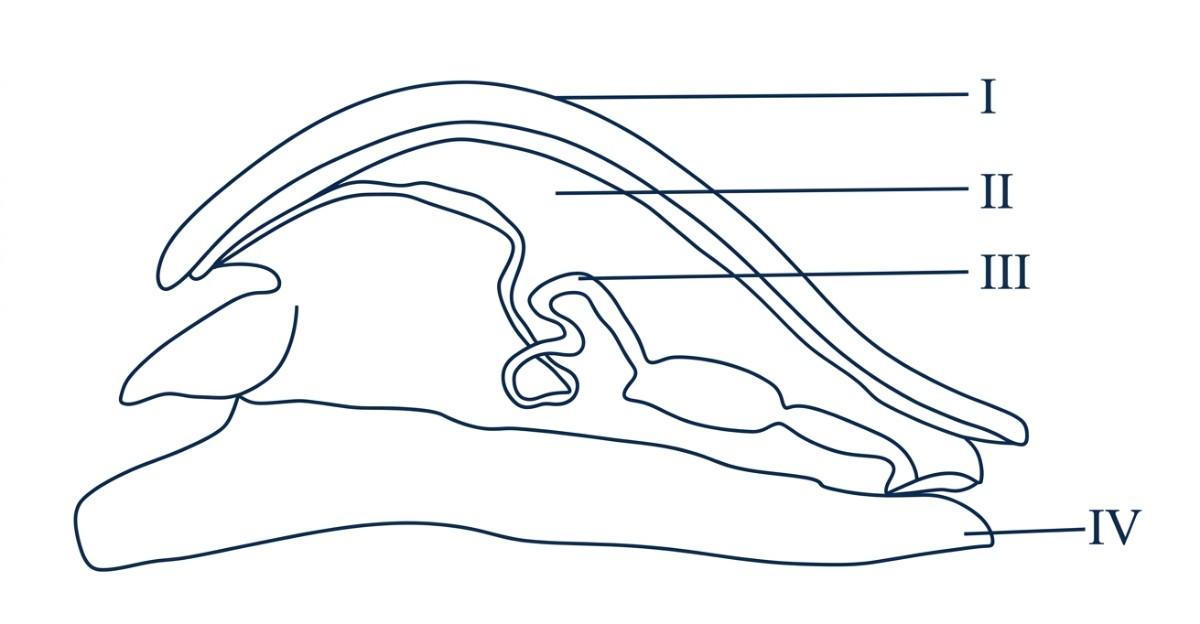

The part labelled I is the
Show explanation Expand Question
 The part commonly labelled I points to the hard, calcareous outer covering known as the shell. The shell serves as a protective exoskeleton that shields the internal visceral mass from predators and physical damage, while also helping terrestrial species prevent moisture loss. The foot is used for locomotion, and the head houses sensory organs.
Not clear enough?

Question 57


The function of the organelle labelled II is to
Show explanation Expand Question
The visceral mass is a part of the anatomy of mollusks, containing most of the internal organs. It is responsible for the overall function of these organs within the organism, which can be analogized to coordinating activities
Not clear enough?

Question 58

The cell component that stores waste products is the
Show explanation Expand Question
In biological cells, particularly in mature plant cells, vacuoles are large, membrane-bound sacs that play a crucial role in maintaining turgor pressure and storing various substances. One of their primary functions is to act as a storage compartment for both nutrients and waste products, isolating potentially harmful metabolic by-products from the rest of the cytoplasm. The Golgi apparatus packages proteins, the cell wall provides structural support, and lysosomes contain digestive enzymes for breaking down cellular debris.
Not clear enough?

Question 59

Which of these plants is considered to be common in an estuarine habitat?
Show explanation Expand Question
An estuarine habitat is a transitional zone where fresh water from rivers mixes with salt water from the ocean, creating a brackish and often muddy environment subject to tidal changes. Mangrove trees are uniquely adapted to thrive in these harsh, saline conditions. They possess specialized features such as pneumatophores (breathing roots) to obtain oxygen from the waterlogged soil and prop roots for stability against tidal currents. Plantain, Gmelina, and Iroko are terrestrial plants that cannot survive in highly saline, waterlogged soils.
Not clear enough?

Question 60

Renal artery branches and divides into a mass of blood capillaries in the Bowman's capsule called
Show explanation Expand Question
Within the mammalian kidney, the functional unit of excretion is the nephron. As the renal artery enters the kidney, it branches into smaller arterioles. An afferent arteriole leads into the Bowman's capsule, where it divides into a dense, knot-like network or mass of tiny blood capillaries known as the glomerulus. It is here in the glomerulus that blood filtration (ultrafiltration) occurs under high pressure, forcing water, urea, salts, and glucose out of the blood and into the Bowman's capsule to form the glomerular filtrate.
Not clear enough?

1...45678...12
In this page
Biology 2025 Jamb Examination
Open Model!