
Biology 2025 Jamb Examination
Biology 2025 Jamb Examination

Question 71
Which of the following exists at the organ level of organization?
Euglena and Paramecium are unicellular (cellular level). Hydra is a coelenterate with tissues but no true organs (tissue level). An onion bulb is a complex structure made of modified leaves and a stem, representing the organ level of organization in plants.
Not clear enough?
Question 72
The organization that provides emergency needs of children globally is
UNICEF (United Nations International Children's Emergency Fund) was specifically created to provide humanitarian and developmental assistance to children and mothers in developing countries and during global emergencies.
Not clear enough?
Question 73
A repeating unit of a very large DNA molecule is made up of
DNA is a polymer made up of many repeating monomer units called nucleotides. Each nucleotide is composed of three parts: a phosphate group, a deoxyribose sugar, and one of four nitrogenous bases.
Not clear enough?
Question 74
Which of the following is an effect of carbon monoxide on humans?
Carbon monoxide (CO) has a much higher affinity for hemoglobin than oxygen does. When inhaled, it binds to hemoglobin to form carboxyhemoglobin, which reduces the oxygen-carrying capacity of the blood, potentially leading to suffocation and death.
Not clear enough?
Question 75
The constantly dividing cells found at the apex of roots and stem during growth is
While 'apical' describes the location, the actual tissue type characterized by constant cell division is meristematic tissue. Meristematic cells are undifferentiated cells that allow for primary and secondary growth in plants.
Not clear enough?
Question 76
Macronutrients required by plants include
Macronutrients are essential elements required by plants in relatively large amounts. These include Nitrogen (N), Phosphorus (P), Potassium (K), Magnesium (Mg), Sulfur (S), and Calcium (Ca). Elements like Boron, Iron, and Zinc are considered micronutrients because they are needed only in trace amounts.
Not clear enough?
Question 77
The longest single bone in human is the
The femur, or thigh bone, is the longest, heaviest, and strongest bone in the human body. It extends from the hip to the knee and is designed to support the weight of the body during locomotion and standing.
Not clear enough?
Question 78
One characteristic which differentiates bats from birds is that bats
While both bats and birds can fly and are warm-blooded (homeothermic), bats are mammals. A defining mammalian characteristic that birds lack is the possession of mammary glands used to nourish their young with milk. Birds and bats both have four-chambered hearts.
Not clear enough?
Question 79
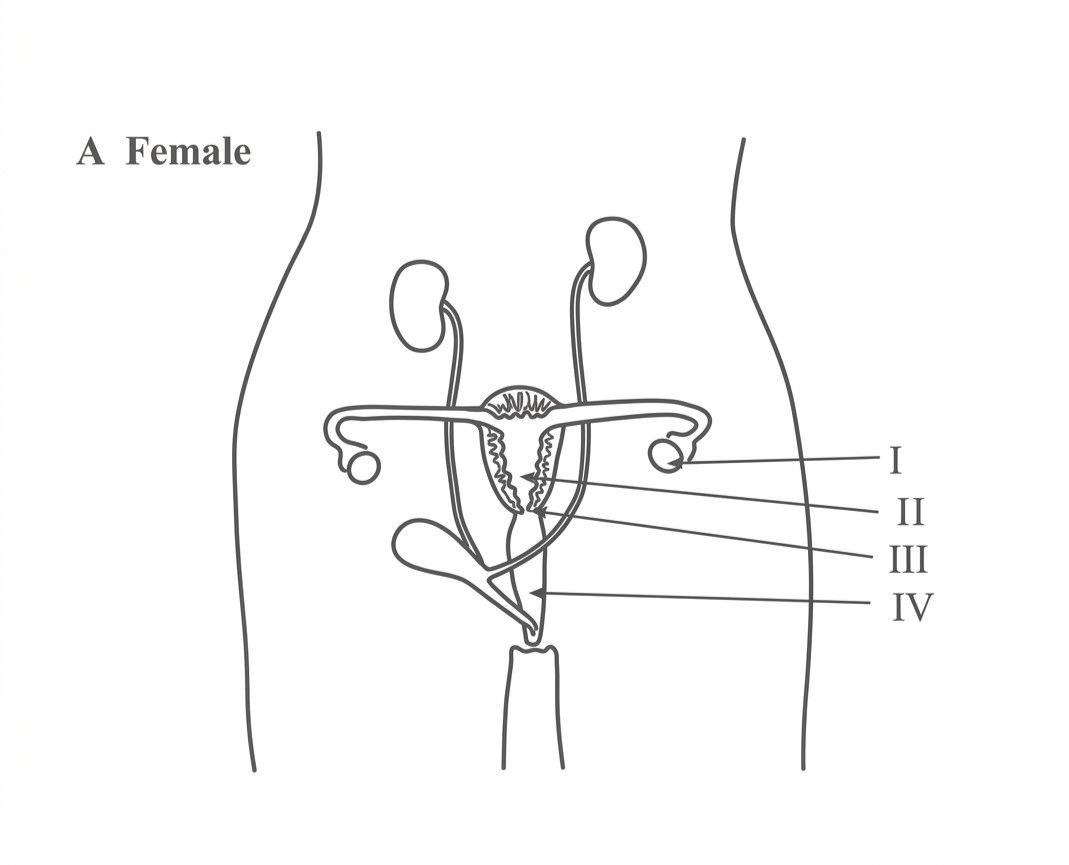
The part labelled II is the
[attachment_0](attachment)
In a standard diagram of the female reproductive system, label I usually refers to the ovary and label II typically points to the uterus (womb), the muscular organ where a fertilized egg implants and develops into a fetus.
In a standard diagram of the female reproductive system, label I usually refers to the ovary and label II typically points to the uterus (womb), the muscular organ where a fertilized egg implants and develops into a fetus.
Not clear enough?
Question 80
The biological association between bacteria and protozoa in the rumen of cattle is an example of
The relationship is a form of symbiosis, specifically mutualism. The bacteria and protozoa help the cattle digest cellulose (which the cattle cannot do alone), and in return, the microorganisms receive a stable environment and a constant supply of food. Both parties benefit from this close association.
Not clear enough?
You might like
Man shall not live by bread alone, but by every word that proceeded out of the mouth of God. This was a response by Jesus to the _______ temptation by the devil?
Which type of salt is found in antacid medications and is used to relieve heartburn and indigestion?
Choose the word that is opposite in meaning to the underlined word.
His father served as a mercenary in the army?
Select the option that best explains the information conveyed in the sentence.
Even though Susan was the last in the examination, her result wasn't too different from what had been expected.