
Physics 2017 Jamb Examination
Physics 2017 Jamb Examination

Question 1
Which is the incorrect formula for a body accelerating uniformly?
The standard equations of linear motion for uniform acceleration are:
1. \( v = u + at \)
2. \( s = ut + \frac{1}{2}at^2 \)
3. \( v^2 = u^2 + 2as \)
Option B and D are different versions of the third equation. Option C is the second equation. Option A suggests \( a = \frac{v^2 - u^2}{2} \), which is missing the displacement factor (s). From the third equation, the correct expression for acceleration is \( a = \frac{v^2 - u^2}{2s} \).
Not clear enough?
Question 2
Which of the following is not an electromagnetic radiation?
Electromagnetic radiation consists of waves of the electromagnetic field, which propagate through space and carry electromagnetic radiant energy.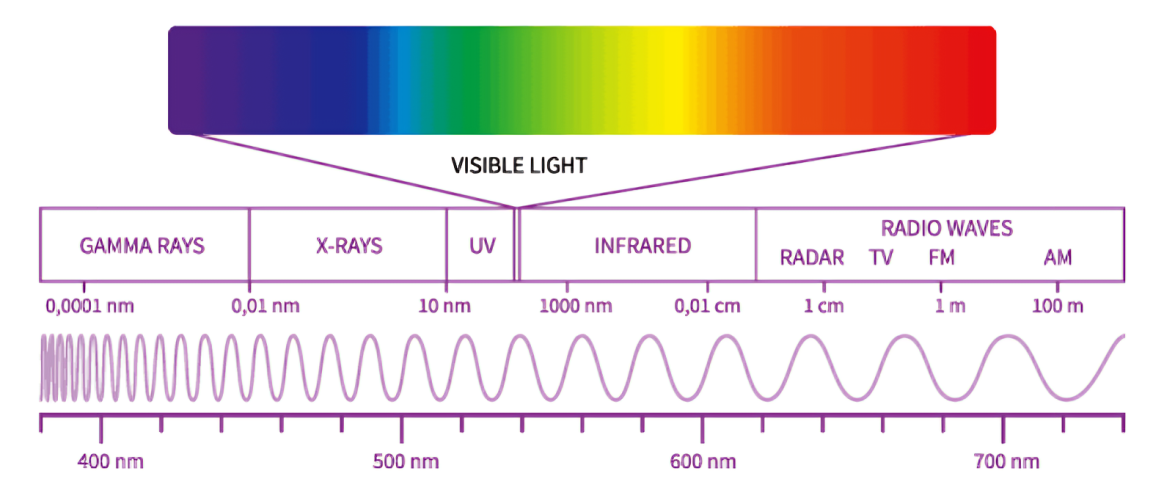
X-rays, radio waves, and sunlight (visible light) are all part of the electromagnetic spectrum and can travel through a vacuum. Sound waves, however, are mechanical waves; they require a physical medium (like air, water, or solids) to travel and are produced by physical vibrations.
X-rays, radio waves, and sunlight (visible light) are all part of the electromagnetic spectrum and can travel through a vacuum. Sound waves, however, are mechanical waves; they require a physical medium (like air, water, or solids) to travel and are produced by physical vibrations.
Not clear enough?
Question 3
Calculate the electric field intensity between two plates of potential difference 6.5V when separated by a distance of 35cm.
The electric field intensity (E) between two parallel plates is given by the potential gradient formula:\[ E = \frac{V}{d} \]Given:
Potential difference \( V = 6.5 \text{ V} \)
Distance \( d = 35 \text{ cm} = 0.35 \text{ m} \)
Calculation:\[ E = \frac{6.5}{0.35} \approx 18.5714 \text{ NC}^{-1} \]The electric field intensity is approximately 18.57 NC\(^{-1}\).
Potential difference \( V = 6.5 \text{ V} \)
Distance \( d = 35 \text{ cm} = 0.35 \text{ m} \)
Calculation:\[ E = \frac{6.5}{0.35} \approx 18.5714 \text{ NC}^{-1} \]The electric field intensity is approximately 18.57 NC\(^{-1}\).
Not clear enough?
Question 4
Why do soldiers march disorderly while crossing a bridge?
Resonance occurs when the frequency of a periodic force matches the natural frequency of a system, causing large-amplitude oscillations. If soldiers march in step (rhythmically), the frequency of their footsteps might match the natural frequency of the bridge. This could lead to a massive increase in the bridge's vibration, potentially causing it to collapse. By marching 'out of step' (disorderly), they ensure their footsteps are random and do not sync with the bridge's natural frequency.
Not clear enough?
Question 5
Calculate the upthrust on an object of volume 50cm\(^{3}\) which is immersed in liquid of density 10\(^{3}\) kgm-3 [g = 10ms\(^{-2}\)]
Upthrust is equal to the weight of the fluid displaced (Archimedes' Principle):\[ U = V \rho g \]Given:
Volume \( V = 50 \text{ cm}^3 = 50 \times 10^{-6} \text{ m}^3 \)
Density \( \rho = 10^3 \text{ kgm}^{-3} \)
Gravity \( g = 10 \text{ ms}^{-2} \)
Calculation:\[ U = (50 \times 10^{-6}) \times 10^3 \times 10 \]\[ U = 50 \times 10^{-2} = 0.5 \text{ N} \]
Volume \( V = 50 \text{ cm}^3 = 50 \times 10^{-6} \text{ m}^3 \)
Density \( \rho = 10^3 \text{ kgm}^{-3} \)
Gravity \( g = 10 \text{ ms}^{-2} \)
Calculation:\[ U = (50 \times 10^{-6}) \times 10^3 \times 10 \]\[ U = 50 \times 10^{-2} = 0.5 \text{ N} \]
Not clear enough?
Question 6
Under what conditions are cathode rays produced in a discharge tube?
In a gas discharge tube, cathode rays (streams of electrons) are produced when the gas inside is at a very low pressure (usually around 0.01 mmHg) and a very high potential difference (voltage) is applied between the electrodes.
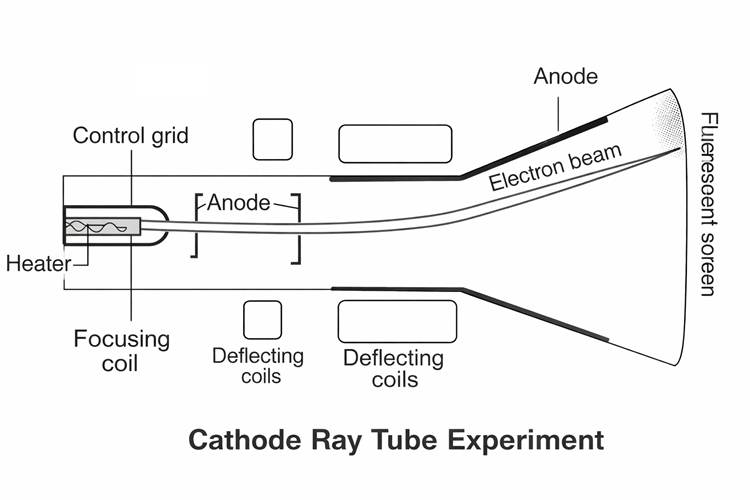
The low pressure reduces the number of gas molecules, allowing electrons to travel from the cathode to the anode without constant collisions, and the high voltage provides the energy needed to pull electrons from the cathode.
The low pressure reduces the number of gas molecules, allowing electrons to travel from the cathode to the anode without constant collisions, and the high voltage provides the energy needed to pull electrons from the cathode.
Not clear enough?
Question 7
Under which of the following conditions is workdone
In physics, work is done only when a force causes a displacement in the direction of the force (\( W = Fd \cos \theta \)).
In options A, C (if the table doesn't move), and D, there is a force being applied, but no distance is covered by the object. When a boy climbs onto a table, he exerts a force to move his own mass against gravity over a vertical distance. Therefore, work is done against gravity.
In options A, C (if the table doesn't move), and D, there is a force being applied, but no distance is covered by the object. When a boy climbs onto a table, he exerts a force to move his own mass against gravity over a vertical distance. Therefore, work is done against gravity.
Not clear enough?
Question 8
Calculate the specific latent heat of vaporization of steam of 1.13 x 10\(^{6}\) J of heat energy is required to convert 15kg of steam to water.
The formula for latent heat is:\[ Q = mL \]Where:
\( Q = 1.13 \times 10^6 \text{ J} \)
\( m = 15 \text{ kg} \)
Solving for \( L \) (Specific Latent Heat):\[ L = \frac{Q}{m} \]\[ L = \frac{1.13 \times 10^6}{15} \]\[ L \approx 75,333.33 \text{ Jkg}^{-1} \]\[ L \approx 7.53 \times 10^4 \text{ Jkg}^{-1} \]
\( Q = 1.13 \times 10^6 \text{ J} \)
\( m = 15 \text{ kg} \)
Solving for \( L \) (Specific Latent Heat):\[ L = \frac{Q}{m} \]\[ L = \frac{1.13 \times 10^6}{15} \]\[ L \approx 75,333.33 \text{ Jkg}^{-1} \]\[ L \approx 7.53 \times 10^4 \text{ Jkg}^{-1} \]
Not clear enough?
Question 9
A cell of internal resistance 2Ω supplies current to a 6Ω resistor. The efficiency of the cell is
The efficiency (\( \eta \)) of a cell is the ratio of the power delivered to the external circuit (load) to the total power generated. It can be calculated using the resistance values:\[ \eta = \frac{R}{R + r} \times 100\% \]Given:
External resistance \( R = 6 \Omega \)
Internal resistance \( r = 2 \Omega \)
Calculation:\[ \eta = \frac{6}{6 + 2} \times 100\% = \frac{6}{8} \times 100\% = 0.75 \times 100\% = 75\% \]
External resistance \( R = 6 \Omega \)
Internal resistance \( r = 2 \Omega \)
Calculation:\[ \eta = \frac{6}{6 + 2} \times 100\% = \frac{6}{8} \times 100\% = 0.75 \times 100\% = 75\% \]
Not clear enough?
Question 10
Which of the following statements is NOT correct?
According to the kinetic molecular theory, molecules in all states of matter (solid, liquid, and gas) are in a state of constant motion. In a liquid, the molecules are close together but have enough energy to slide past one another. They are certainly not stationary. Therefore, statement A is incorrect.
Not clear enough?
You might like
Each of the questions below consists of two words that have a certain relationship to each other.
Select the pair of words.
EXPURGATE : PASSAGE
This question is based on General Literary Appreciation
The poetic device that forcefully brings together two seemingly unrelated ideas or concepts is
After the Israelites complained to Moses and Aaron, what did the Lord promise to feed the Israelites with in the morning?